The Privacy by Design Playbook for Healthcare Marketers



You're in an impossible position.
The goalposts of privacy compliance keep moving—new state laws, evolving interpretations, shifting risk tolerances inside your own organization. You're expected to chase a finish line that gets further away every time you think you're close.
At the same time, you're being asked to drive more growth, more patient volume, more results than ever before. Digital innovation demands keep accelerating. Data-driven insights aren't optional anymore—they're table stakes. Leadership wants proof that marketing works, and they want it now.
And you're doing all of this while navigating a fundamental shift in consumer expectations. Privacy isn't just a legal requirement anymore—it's a baseline expectation. People expect their sensitive health information to be protected. They're increasingly skeptical of how organizations handle their data. The margin for error has disappeared.
Most healthcare marketers respond to this pressure by treating privacy as a compliance checkbox—something legal handles, something that inevitably slows marketing down. But there's a different approach, one that doesn't pit performance against privacy or force you to choose between growth and compliance.
It's called Privacy by Design. And if you're not already using it, you're making everything harder than it needs to be.
What Privacy by Design Actually Means
Privacy by Design is a globally recognized framework that embeds privacy into every aspect of your products, strategies, operations, and culture. It's not a post-launch audit or a legal review process. It's design thinking applied to privacy—a proactive approach that treats privacy as a core feature, not a constraint.
The framework comprises seven principles. Healthcare organizations like Planned Parenthood have been using these principles for over a decade to build products, launch campaigns, and make strategic decisions that protect patients while enabling growth. Teladoc Health has used Privacy by Design to navigate the explosive demand of COVID-era telehealth without sacrificing compliance or performance.
What follows is how these principles translate into practical, day-to-day decisions for healthcare marketers under pressure to do more with less—and how privacy, when done right, becomes the strategic advantage that fuels performance instead of blocking it.
Principle 1 & 2: Be Proactive, Not Reactive—and Make Privacy Your Default
The problem marketers face: Privacy guidance feels like it comes out of left field. Product managers, data scientists, and marketing teams regularly say, "Why didn't you tell us sooner?" Privacy isn't new, but it feels new to the people on the front lines—the ones responsible for driving patient volume, proving ROI, and keeping campaigns running.
What this looks like in practice: Planned Parenthood doesn't wait for compliance issues to surface. When they built a birth control and period tracker, they made a decision from day one: we're not sharing any data. Not with partners, not with analytics platforms, not with anyone. The decision wasn't reactive—it was embedded in the product design before the first line of code was written.
Why? Because Kevin Williams, who leads digital strategy at Planned Parenthood, knows the cost of getting it wrong. "For us, getting it wrong once—the cost of that is exponentially different than other brands," he explained. When the tracker later became a political flashpoint during court cases examining reproductive health apps, Planned Parenthood was already positioned correctly. They could point to their privacy-first design and say, "We told you from day one we weren't sharing your data. And we documented it."
The proactive approach:
- Bring privacy into the first conversation. Not the final legal review. The first meeting where a campaign, product, or strategy gets discussed.
- Design for the person in the back of the room. Planned Parenthood's rule: if you design for the most vulnerable person you serve, you protect everyone in between.
- Document your privacy decisions early. When challenges or audits come later, you'll have a clear record of why you made the choices you did.
Why privacy as default matters: Most organizations operate with an implicit bias toward maximum data collection. The instinct is: capture everything, figure out what's useful later. Privacy by Design flips this. Start with the minimum data necessary to achieve your goal. Only expand when there's a clear, consented reason to do so.
Teladoc's Xan Spiwak put it plainly: "We went through this huge data boom where it felt like we had every insight and piece of data at our fingertips. It seems like we're losing more and more of that. And yet we're kind of embracing more of HIPAA's minimum necessary principle."
This isn't about deprivation. It's about precision. When you only collect what you need, you reduce risk, simplify governance, and—counterintuitively—often get better signal from your data because you're not drowning in noise.
Principle 3: Embed Privacy Into the Core of Your Design
The problem marketers face: Privacy is often treated as a separate function that operates in its own silo. Marketing builds something, then privacy reviews it. If there's a problem, marketing has to backtrack, rebuild, or compromise the campaign's effectiveness. It's frustrating for everyone involved.
What this looks like in practice: When Planned Parenthood launched telehealth services for gender-affirming care post-COVID, they didn't build first and ask privacy questions later. Williams described their approach: "We adopted our same product approaches—focus on the people we serve, identify what we need to do to support them, and have the lawyers in the room with us. The first conversation."
This isn't about slowing down innovation. It's about avoiding the expensive, demoralizing scenario where you build something, launch it, and then discover a privacy issue that forces you to tear it down or gut its functionality. When privacy is embedded from the start, you move faster because you're not constantly backtracking.
The embedded approach:
- Privacy sits in the design meeting. Not just the compliance review. The product, campaign, or feature design conversation.
- Use privacy constraints as design parameters. The best products aren't designed in the absence of constraints—they're designed with them. Privacy requirements can force better, more focused solutions.
- Test privacy implications before launch. Don't wait for the legal audit. Build privacy testing into your development and campaign workflow.
Xan Spiwak shared what this enabled at Teladoc: "When you embed privacy into the core of your culture, your strategy, your operations, your products and services—you're a little bit more nimble to be able to address that." When user behavior shifts or regulations change, you can adjust on the fly instead of slamming the brakes at 100 miles an hour.
Principle 4: Privacy as Positive-Sum (Full Functionality)
The problem marketers face: The assumption is that privacy always means sacrificing performance. Better privacy = worse targeting = higher CAC = lower volume. It's framed as a zero-sum game where privacy wins mean marketing loses.
What this looks like in practice: This principle challenges the false binary. Privacy by Design argues that you shouldn't have to choose between privacy and functionality—you can have both. But it requires rethinking how you define "functionality."
Planned Parenthood could track website visitors in granular detail. They could retarget aggressively. They could build detailed behavioral profiles to optimize every touchpoint. But Williams made a different choice: "I'm not willing to risk having some notification being sent to you in the wrong way or having some other thing sent to you in a personal or private way that you didn't actually consent to."
So what did they sacrifice? On the surface, visibility into who's visiting their site, demographic breakdowns, behavioral segmentation. But what they gained was more valuable: trust at scale. When people know Planned Parenthood won't track them, share their data, or expose their reproductive health searches, they engage more openly. They're willing to provide information when it's clearly consented and purposeful.
The positive-sum approach:
- Redefine what "working" means. If your campaign requires invasive tracking to succeed, you might be optimizing the wrong thing. Rethink the goal, not just the tactics.
- Optimize for consented engagement. Teladoc discovered that users who actively consent to tracking and communications are their most engaged users. They're telling you exactly how they want to hear from you—that's more valuable than inferred intent from third-party cookies.
- Measure differently. If you can't track everything, track what matters. Down-funnel conversions (appointments, not clicks), retention, lifetime value, trust indicators.
Xan Spiwak put it clearly: "Consented data is gold. And I think there was somebody earlier who had even brought up that they're really struggling to get an understanding of who their users are because their consent is really low." The answer isn't to bypass consent—it's to optimize for it.
Principle 5: End-to-End Security (Lifecycle Protection)
The problem marketers face: Security is often framed as IT's problem, not marketing's. But when a breach happens—or when a vendor mishandles data—marketing is the one who loses campaign performance, faces compliance scrutiny, and has to rebuild trust with patients.
What this looks like in practice: Privacy by Design requires thinking through the entire data lifecycle: collection, storage, use, sharing, and deletion. It's not just about what you do with data—it's about what everyone in your data supply chain does with it.
Planned Parenthood applies this by vetting every vendor before they integrate. Williams described how his colleague Brian Kim "sits in the spaces where we have to speak to our vendors. We have to speak to folks to say, 'Hey, if you're gonna work with us in this way, we have to make sure that the information that we are collecting is actually being used in a meaningful way.'"
They don't assume vendor compliance. They verify it. And if a vendor can't meet their standards, they don't use them—even if it means sacrificing a "nice-to-have" feature or a higher ROI on paper.
The end-to-end approach:
- Map your data flows. Where does patient data go after you collect it? Which vendors touch it? What happens when you delete it?
- Vet your martech stack for privacy. Don't assume tools are compliant just because they say they are. Review BAAs, data processing agreements, and vendor security practices.
- Build deletion into your workflow. Retention policies aren't just compliance checkboxes. They reduce risk and force you to justify why you're holding onto data.
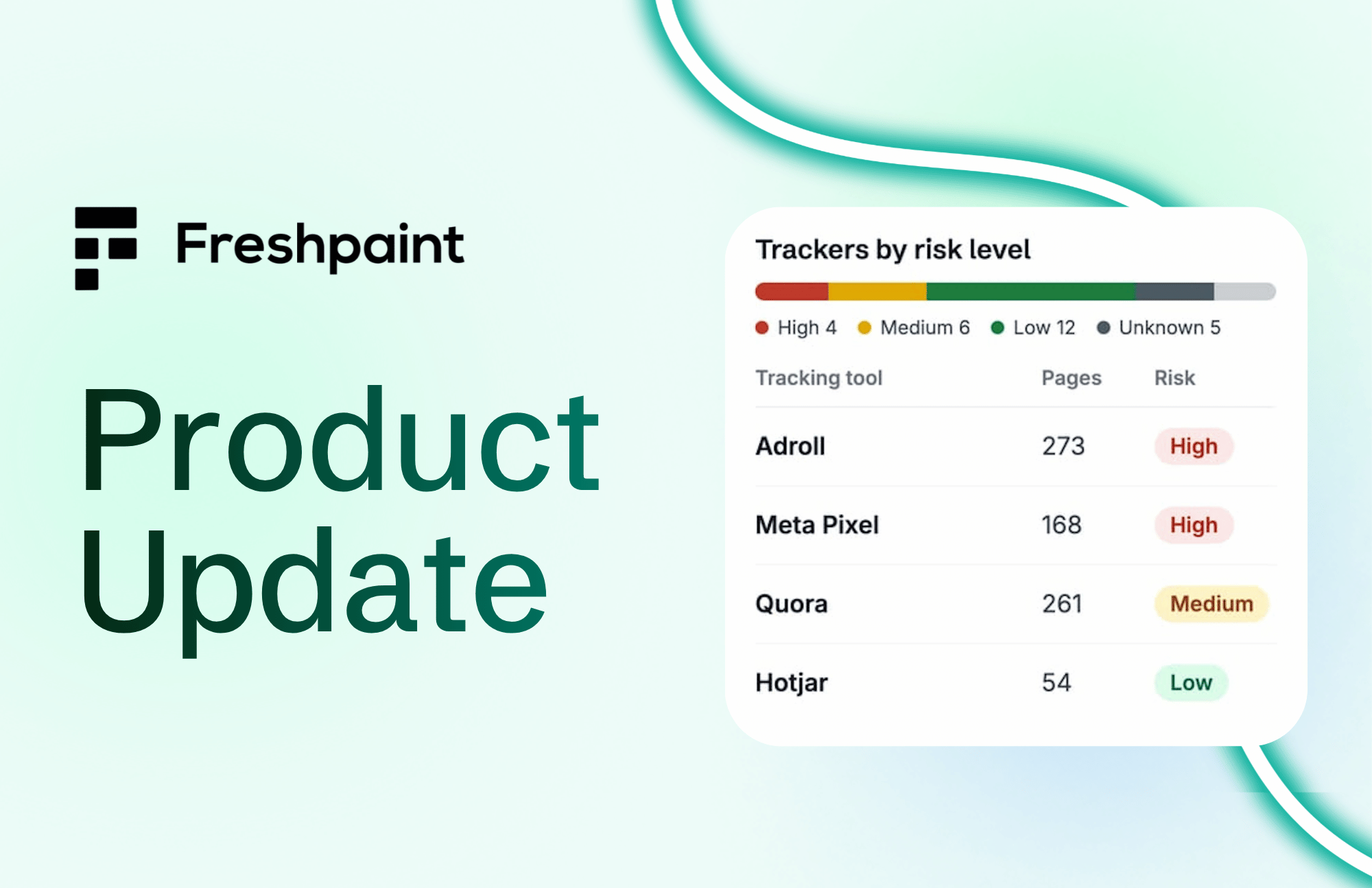
This is where a platform like Freshpaint becomes critical. When PHI is automatically removed before data reaches ad platforms or analytics tools, you've built end-to-end security into your infrastructure. You're not relying on every vendor to handle sensitive data correctly—you've designed a system where sensitive data never reaches them in the first place.
Principle 6: Visibility and Transparency
The problem marketers face: Patients don't understand what you're doing with their data. Neither do half the people inside your organization. When something goes wrong—or when someone asks what data you're collecting and why—you scramble to piece together an answer.
What this looks like in practice: Planned Parenthood makes their privacy stance visible everywhere: on their website, at health centers, in every digital product. "Long before fancy disclaimer language was required around what you were tagging or not tagging, we would tell people, 'Is it okay that you feel comfortable with sharing information with us?'" Williams explained. This wasn't reactive compliance—it was cultural.
When Planned Parenthood came under scrutiny during political attacks on reproductive healthcare, they mobilized across their entire federation. They didn't have to scramble to figure out their privacy position—they already had one, clearly documented and communicated. Their affiliates in California had been "making noise" about privacy for years. Everyone else learned to listen.
The transparency approach:
- Communicate privacy decisions externally. Don't just document them internally. Tell patients what you're doing, what you're not doing, and why.
- Make privacy policies accessible. Not buried in legal jargon. Written in plain language that actually explains your data practices.
- Use consent mechanisms as education moments. Cookie banners aren't just compliance tools—they're opportunities to show patients you respect their choices.
Xan Spiwak shared a tactical win: Teladoc redesigned their consent banner with clear language and better design. The result? Higher consent rates, slightly higher opt-outs, and much better signal. "That is the best signal that we're making an amazing business decision and we're still very clearly giving users their right to opt out. We're giving them informed choice."
Principle 7: Respect for User Privacy (User-Centric)
The problem marketers face: There's always pressure to push boundaries. Can we collect one more field? Can we track one more behavior? Can we retarget more aggressively? The instinct is to squeeze every possible data point out of every interaction.
What this looks like in practice: Privacy by Design flips the question. Instead of "What can we get away with?" it asks, "What does the user actually want us to know?" And then it respects that boundary.
Planned Parenthood could ask for more information during appointment booking. They could pre-populate forms with behavioral data. They could default users into communications. But Williams described their approach: "We don't want to ask you one question more than we absolutely have to. We fight about it. It's like, 'Well, why do you need to know that? We gotta prep around.' It's like, I don't know if you need that for an appointment."
This isn't just ethics—it's strategic. When you respect user privacy, you build trust. And trust compounds. Patients are more likely to share information when they believe you'll protect it. They're more likely to complete appointments, engage with care, and refer others.
The user-centric approach:
- Default to less data collection, not more. Only ask for what you need. Justify every field in your forms, every tag on your website, every email you send.
- Give users control. Let them manage their communication preferences. Let them see what data you have. Let them delete it if they want.
- Measure engagement quality, not just quantity. A smaller list of engaged, consented users is more valuable than a massive list of people who barely tolerate your emails.
Teladoc tracks data subject rights requests as a proxy for what members care about. "We see more of our members exercising those rights, so we understand that now more than ever, our member base really, really cares about their privacy," Xan explained. "And so we should too."
The Cultural Shift: From Compliance to Competitive Advantage
None of these principles work in isolation. Privacy by Design isn't a checklist—it's a cultural transformation. It requires buy-in from marketing, product, legal, compliance, leadership, and IT. That's hard work. It takes time. It requires champions who are willing to fight for a different approach.
But the organizations that make this shift—like Planned Parenthood, like Teladoc—discover something powerful: privacy becomes a competitive advantage. It's not a constraint that limits performance. It's the foundation that enables better performance.
Kevin Williams put it plainly: "We just all have to be okay that the work is shifting, is constantly evolving, and we're always gonna be at different stages. Stay informed, stay engaged, be honest about what you know or don't know, and align yourselves with people that maybe know a little bit more."
The alternative is what most healthcare marketers are living right now: reactive compliance, constant firefighting, campaigns that get shut down overnight, strategies that get derailed by lawsuits, and a nagging fear that the next regulation will break everything you've built.
Privacy by Design offers a different path. It's harder upfront. It requires discipline. But it's the only sustainable way to build marketing strategies that drive growth, prove impact, and protect your organization from the compliance disruptions that cripple everyone else.
Making the Shift: Where to Start
You don't need to implement all seven principles overnight. Start with one:
Bring privacy into your next campaign planning meeting. Before anyone talks tactics, ask: What data do we actually need? How will we protect it? What will we tell users about what we're collecting?
From there, build the habit. Privacy in every product review. Privacy in every vendor evaluation. Privacy in every data request. Over time, it stops feeling like an extra step and starts feeling like the only way to operate.
And when you're ready to move faster—when you want the infrastructure that makes privacy-first marketing actually scalable—that's when you need a platform designed for this reality. One that removes PHI before data reaches your ad platforms. One that gives you visibility into performance without exposing sensitive information. One that makes consent management a performance tool, not a compliance burden.
Privacy isn't the blocker anymore. It's the advantage that separates healthcare marketers who thrive from those who survive. The question is whether you're ready to build that advantage into everything you do—or whether you're going to keep reacting to the next compliance crisis, the next lawsuit, the next regulation that forces you to start over.
Freshpaint helps healthcare marketers turn privacy into a performance advantage—giving you the visibility to make better decisions, the tools to stretch fixed budgets further, and the infrastructure to protect your strategies from compliance disruption. Talk to an expert to see how privacy-first measurement enables the growth you're being asked to deliver.

.png)