Programmatic Advertising in Healthcare: Everything You Need to Know
.png)



As a healthcare marketer, it’s easy to feel like you’ve got one hand tied behind your back. You want to invest in high-efficiency channels, like programmatic advertising, but using them feels like navigating a regulatory minefield.
While leadership keeps demanding better results, you’re stuck between using the safe channels you know and adopting new ones that could take your campaigns to the next level.
Here’s the secret though—once you’ve simplified the adtech jargon and identified the regulatory gotchas, you can use programmatic advertising in healthcare. That means broader reach, finer targeting, and better ROI. So let’s break down how programmatic advertising actually works and identify the exact tools you can use to run compliant programmatic campaigns.
Key takeaways
- Programmatic advertising enables healthcare marketers to scale their digital programs, offering precision targeting, real-time optimization, and cross-channel reach that traditional media can’t match.
- Using programmatic advertising in healthcare requires careful data governance. The most common HIPAA violations in programmatic stem from accidentally sharing PHI with unauthorized third-party platforms, often in the form of health-revealing URLs, audience definitions, and conversion signals.
- Healthcare marketers can run compliant programmatic campaigns by implementing a data control layer that strips PHI from data before it reaches ad platforms. This makes it possible to use tactics like contextual targeting, behavioral targeting, and lookalike modeling without increasing compliance risk.
What is programmatic advertising in healthcare marketing?
Programmatic advertising is a type of digital advertising that uses real-time data to automate the buying and placement of ads across websites, apps, and connected TV. Instead of the manual, back-and-forth process of traditional media, programmatic allows healthcare marketers to target individual patient segments on digital platforms they use every day.
Benefits of programmatic advertising in healthcare
Programmatic advertising offers healthcare marketers a combination of scale and precision that isn’t found in traditional advertising methods or PPC campaigns. By enabling you to engage your target audiences on digital devices, programmatic campaigns help you increase brand awareness and drive conversions—without wasting budget.
Precision targeting at scale
Healthcare advertising campaigns are inherently niche. Orthopedic patients don’t need to know about your organization’s new oncology center, and dental patients aren’t looking for their nearest ER. One-size-fits-all campaigns increase awareness, but it’s hard to tie them to conversions. Programmatic advertising lets you use specific data, such as demographics, behavior, and geography, to reach specific audiences across thousands of sites and apps. With this precise targeting at scale, you can run personalized campaigns and drive more engagement.
Efficiency and real-time optimization
Programmatic advertising’s real-time infrastructure enables you to get more out of your spend. Real-time bidding means you only pay what an impression is worth in the moment, and continuous reporting allows you to shift budget towards ads that are performing best mid-campaign, instead of waiting to discover what worked after your budget has been spent.
Cross-channel, cross-device reach
Modern patients move fluidly between websites, apps, social platforms, and connected TV. While traditional media and PPC are isolated in single channels, programmatic enables you to deliver coordinated messaging across all the places your patients engage. These multi-channel campaigns are critical for meeting modern consumers’ expectations—McKinsey research has found that companies delivering coordinated, personalized messaging across channels see revenue increases by 5 to 15 percent.
Transparency and measurement
Traditional media campaigns give you a directional understanding of performance at best. A campaign may lead to increased revenue, but there’s no way of knowing the ads that worked and those that didn’t. Programmatic advertising platforms offer impression-level visibility, making it possible to analyze where ads appeared, who saw them, how much they cost, and how they performed. This insight helps you understand your audience and optimize campaigns over time.
Key Programmatic Advertising Strategies and Tactics
With the right strategy, programmatic advertising gives healthcare marketers access to a toolkit of targeting tactics that traditional media can't match. Knowing the right tactics to use and how to manage compliance risk is what turns theory into action. Let’s walk through the five core programmatic advertising tactics healthcare marketers should know.
Contextual targeting capabilities allow marketers to place ads on websites and apps based on the content of the web page, rather than the identity or behavior of the person viewing it. That means you could serve ads for a diabetes monitoring tool alongside articles about blood sugar monitoring, or place a cardiologist department’s ad on a medical journal page covering heart disease. As contextual targeting is not based on PHI, it carries very low compliance risk.
Behavioral and demographic targeting enables marketers to use data signals, such as age, geography, and browsing history to define a target audience profile and serve ads to users who match that profile. A healthcare system might, for example, design a campaign for adults over 50 in a certain metro area who have shown interest in orthopedic content. Although targeting patients using non-health information is viable under HIPAA, targeting based on users’ engagement with condition-specific pages will put compliance at risk.
For many services, patients require continued education and engagement before they convert. Programmatic platforms’ retargeting capabilities make it possible to serve ads to people who have previously interacted with your content, driving further engagement and conversions. Retargeting campaigns carry higher risk, as targeting patients based on PHI is a violation of HIPAA.
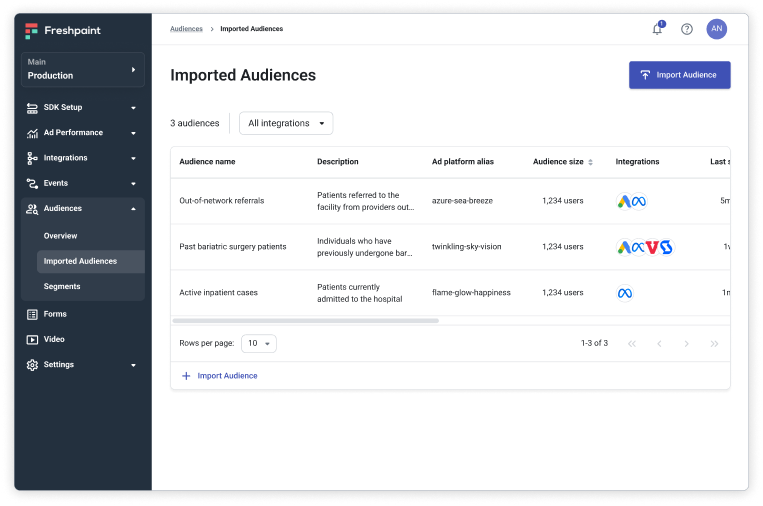
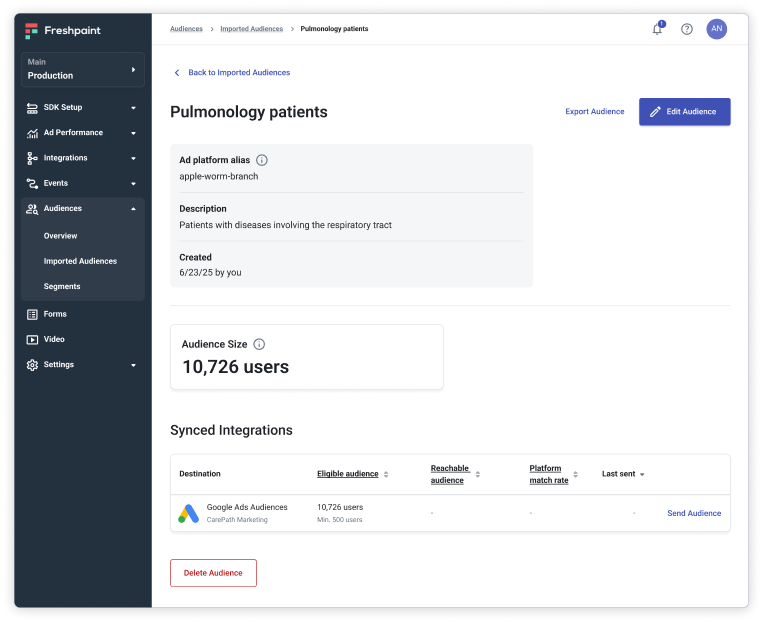
Programmatic advertising additionally allows you to scale your reach with lookalike modeling. Lookalike modeling takes an existing seed audience, such as a list of current patients, and finds new users who share similar characteristics. It’s a great method for expanding campaigns to people who are statistically likely to be interested in your services. Just ensure that seed audiences shared with third-party platforms don’t contain PHI, as this increases compliance risk.
As many healthcare providers operate regionally, programmatic platforms’ geofencing capabilities are extremely valuable. Geofencing allows marketers to draw a virtual perimeter around a physical location, such as a hospital, competitor clinic, or medical conference venue, and serve ads to users within that boundary. While geofencing advertising targets based on location rather than PHI, several states, including New York, have passed laws restricting geofencing around healthcare facilities, as serving ads to someone after they leave a healthcare facility can reveal health information.
Where HIPAA Compliance Breaks in Programmatic Advertising
Programmatic advertising offers healthcare marketers great power, but it also requires them to take responsibility for how patient data is being collected, managed, and shared. If you don't, the regulatory consequences can be immense—Advocate Aurora Health recently paid $12.25 million to settle a class action lawsuit after advertising tracking code embedded on its website, patient portal, and scheduling app exposed the PHI of 3 million patients without consent.
Compliance may seem complex, but at the root there are three ways in which healthcare marketers violate compliance when using programmatic advertising. Here are three actions for healthcare marketers to avoid.
Implementing pixels on sensitive pages and capturing health-revealing URLs
When retargeting pixels from platforms like Meta or Google fire on condition-specific pages, they capture both the page URL and the website visitors identifiers, such as an IP address or device ID. Under HHS guidance, the collection of health information and identifiable information in combination constitutes PHI. When pixels transmit that data to an ad platform that hasn't signed a BAA, it creates an unauthorized disclosure of PHI.
Building audience segments from PHI and sharing them with programmatic advertising platforms
Healthcare marketers may build audience segments using PHI — grouping everyone who browsed cardiology content into a "heart health" segment, for example. Exporting these segments to an ad platform for targeting reveals the health intent of each user within them. As platforms like Meta and Google don’t sign BAAs, sharing this information amounts to disclosing PHI to a non-compliant third-party.
Sharing PHI as conversion signals
Conversion tracking often relies on sending event data back to ad platforms to measure campaign performance. When a conversion event, such as a form submission on an appointment page, includes URL parameters or page paths that describe a specific condition or treatment, the conversion signal itself becomes health-revealing. Passing that data to an ad platform without first stripping the sensitive details turns routine performance measurement into a compliance violation.
The solution to these challenges doesn’t have to be abandoning programmatic advertising. Instead, you can establish better control over what data is being collected and shared with third-party platforms, making it possible to scale advertising without increasing risk.
How to Run Programmatic Ads in Healthcare Without Violating HIPAA
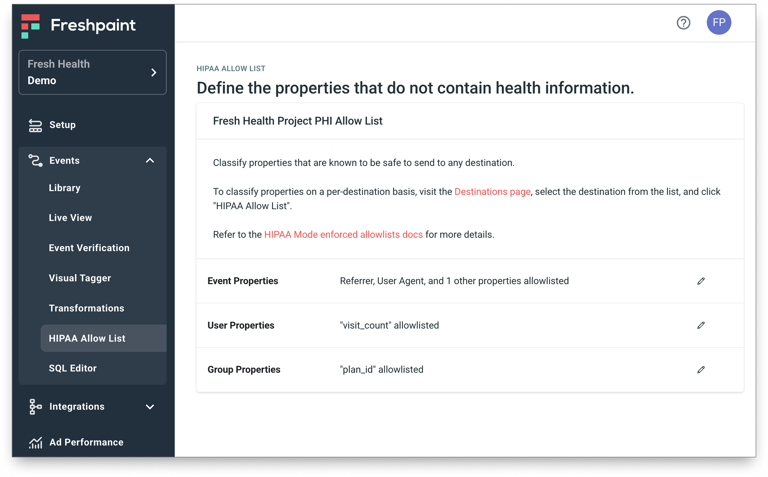
The key to running programmatic campaigns without violating HIPAA is to implement a governance layer between your website and your ad platforms that strips data of sensitive PHI before it’s ever sent to advertising tools.
As a healthcare organization, you’re collecting a range of PHI every day—diagnoses, treatment plans, engagements with condition-specific content, and demographic information. You can collect for operational purposes, but sharing it with third-party companies, like advertising platforms, is a significant HIPAA violation.
That’s why leading healthcare marketers are using privacy-first healthcare marketing platforms, like Freshpaint, to control which data points are shared with advertising platforms. You’re able to share the data needed to run powerful programmatic campaigns, layering in contextual targeting, behavioral targeting, and lookalikes, without compromising compliance.
For years, technical limitations have prevented healthcare marketers from including programmatic advertising in their strategy. But now, with the right tools and enablement, healthcare marketers can make programmatic a core part of their strategy, resulting in better reach, finer targeting, and greater ROI.
Ready to implement compliant programmatic advertising in your healthcare marketing? Book a demo with Freshpaint to see how you can bring programmatic to life today.

.png)