Turn Enrollment Black Boxes into Your Best-Performing Channel




The enrollment period ends. The debrief starts. And somewhere in that meeting, someone asks the question that makes every payer marketer's stomach drop: What actually drove those enrollments?
For most teams, the honest answer is incomplete.
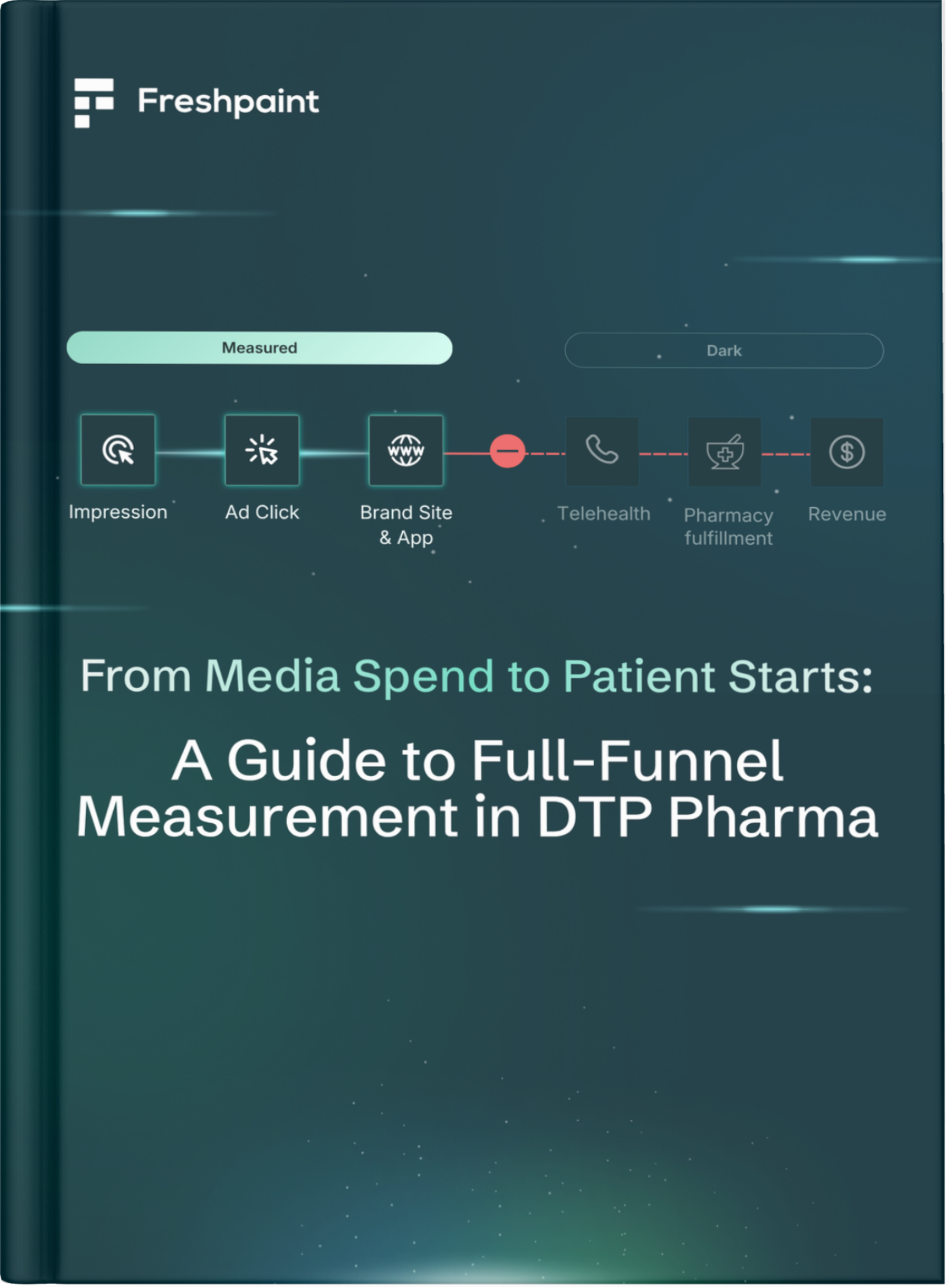
They can account for impressions, clicks, and cost-per-click. They can show landing page traffic and lead volume. But as for what happened inside the enrollment platform — how many people started an application, how many abandoned it, how many completed? That data rarely makes it back to the people who spent millions of dollars getting prospects there.
This isn't a reporting problem. It's a strategy problem. And it's quietly costing payer marketing teams more than they realize.
The fix is simple in concept: capture BOFU enrollment events (quote, application start, application complete) inside third‑party enrollment platforms in a privacy‑safe way, route those signals into your ad platforms and attribution tools, and run three plays — retarget drop‑offs, suppress completed enrollees, and build lookalikes from real members. The rest of this piece shows how to put those three plays into practice before AEP/OEP.
The Moment You Lose Visibility
Most payers route prospective members to third-party enrollment platforms like HealthSherpa or Connecture. It's operationally practical. It's often contractually required. But the moment a user crosses from your owned domain into that environment, something breaks: the tracking stops.
Tom Di Domenico, EVP, Digital Strategy & Technology at performance marketing agency Amsive Health, describes this as a continuity problem, not a tracking problem. “The challenge was never a lack of events to track. It's the lack of continuity across systems — stitching together what happened on your site with what happened inside the enrollment platform, tied back to the same user.”
That continuity gap has real consequences.
Quotes, application starts, application completions — the most meaningful conversion events in your entire funnel — are happening somewhere you can't see, inside a system you don't control.
Your ad platforms have no idea those events occurred. Your attribution models don't know either. From the perspective of your measurement stack, the user clicked an ad, arrived at your site, and then vanished.
Without application-level signals flowing back to your ad platforms, you're forced to optimize to whatever you can measure — clicks, landing page visits, quote requests. These metrics look like performance. They aren't. They're as far upstream from an actual enrollment as you can get while still calling something a conversion.
Signals as Assets, Not Just Analytics
Here's the more important shift: when payer marketers solve this problem properly, they don't just get better reports. They get new capabilities.
Most teams today treat bottom-funnel signals as proof of performance — something you pull together after the campaign to justify the budget to the CFO.
The better frame is to treat those signals as inputs for improving performance: using enrollment events to sharpen the campaigns still running, tighten the audiences you're reaching, and eliminate the waste baked into every campaign that can't see past the click.
Tom sees it as a change in what kind of conversation becomes possible.
“When you have that continuity — when enrollment events are actually flowing back into your stack — it stops being an analytics conversation and becomes a media strategy conversation,” Tom explains. “You can retarget the people who dropped off, suppress the people who completed, build lookalikes from your actual enrollees. That's a different game entirely.”
Those three moves — retargeting, suppression, and lookalikes built from real enrollment signals — are where the strategic payoff lives. And right now, most payer marketing teams can't run any of them.
Three Plays Every Payer Marketer Should Be Running
By running the three plays below, payer marketers will be better equipped to achieve lower cost‑per‑enrollment and higher enrollment volume.
Play 1: Retarget Application Drop-Offs

Here’s a scenario that probably happens more often than we’d like to admit. A prospect clicks your ad, lands on your site, navigates into the enrollment platform, and starts an application. Then they stop. Maybe something came up. Maybe they hit a question they weren't prepared for. Maybe they're comparison-shopping across plans.
Without visibility into application start events, you never know this happened. They disappear into the enrollment platform and you never hear from them again.
With those signals in hand, however, you can identify everyone who started but didn't complete, build a retargeting audience, and reach them with messaging designed to bring them back — before they enroll somewhere else, or don't enroll at all.
These are your highest-intent prospects. They showed up, they engaged, they got most of the way through. The window to re-engage them is short. Right now, most payer marketing teams don't even know it exists.
Play 2: Suppress Completed Enrollees — and Stop the Waste

This is the most immediately quantifiable opportunity, and the one that tends to get leadership's attention fastest.
When someone completes an enrollment, they should exit your acquisition campaigns immediately. But without application complete events flowing back to your ad platforms, that suppression can't happen. You keep serving ads to people who are already members.
Based on his experience working with clients across a broad spectrum of industries, Tom estimates that at least 10 percent of acquisition budget is probably wasted this way across typical payer campaigns — a figure that translates to millions of dollars for teams with meaningful AEP spend.
“For somebody who already requested a quote, or you've determined they're not a qualified candidate for whatever reason,” he says, “that's real money going nowhere.”
Real-time suppression, built on actual enrollment completion signals, closes that leak directly.
Play 3: Build Lookalikes from Real Signals — Not Proxies

Lookalike audiences are the best thing since sliced bread because they help you reach people who resemble your most valuable prospects and existing members.
The effectiveness of your lookalike audiences, however, is only as good as the seed they’re built from.
And for most payer campaigns, that seed is weak: clicks, landing page visitors, people who made it as far as requesting a quote. These are broad, early-funnel signals. The lookalike models built on them reflect that.
Application starters and completers are a fundamentally different input. They represent people who engaged deeply enough with the process to begin — or finish — an enrollment. Lookalikes built from those signals more closely mirror your actual member base, which means better match rates, lower cost-per-acquisition, and audiences that are meaningfully more likely to convert.
In short, stop building their lookalike models on the equivalent of window shoppers. Because the right seed audience is already sitting inside an enrollment platform.
Why Workarounds Fall Short — and What to Do Instead
By this point, the natural question is: why aren't more teams already doing this?
Most aren't sitting still. The most common workaround is deploying Google Tag Manager (GTM) on white-labeled enrollment pages — an approach that creates the feeling of coverage while introducing serious compliance exposure. But GTM wasn't designed for environments where users are selecting health plans. And using it as a bridge between your ad stack and a third-party enrollment platform puts you in genuinely gray territory from a HIPAA standpoint.
Other teams lean on Google Analytics data streams to attempt cross-domain attribution or use platform-native tools from Google and Meta to recover some signal post-click.
Both of these approaches share the same two problems:
- They're unreliable — no standardized full-funnel event model, no real-time abandonment signals, no consistent way to carry channel context across a domain boundary.
- Even when they work technically, there's no compliant path to route those signals into ad platforms so you can act on them. You can see a little more. You still can't do anything with it.
Running the three plays described above — retargeting, suppression, and lookalikes built from real enrollment signals — requires something different: a compliant data path that captures enrollment events inside third-party platforms and routes them into ad platforms and attribution systems without exposing protected health information.
That's what Freshpaint is purpose-built to provide. Our HIPAA-compliant data layer sits inside enrollment ecosystems like HealthSherpa and Connecture, captures application events — quote views, application starts, completions — and routes them compliantly into ad platforms, CDPs, and data warehouses. That means payer marketers can finally optimize to real enrollments instead of proxies — reducing cost-per-enrollment, eliminating wasted spend on existing members, and proving marketing’s direct impact on revenue.
Ready to unlock compliant enrollment optimization today?
Join our webinar on April 15: From Drop-Offs to Enrollments: Turning HealthSherpa & Connecture Data Into Revenue.
Or reach out and talk to one of our experts today.