HIPAA-Compliant Healthcare Advertising: How to Run Compliant Campaigns
.png)



Healthcare marketers are tired of watching their counterparts in eCommerce and Media deliver clever, data-driven campaigns that easily acquire customers quarter after quarter. Meanwhile, they’re left flying blind, subject to strict privacy regulations that hinder advertising and measurement. Every targeting decision has become a risk assessment, and what should be creative, performance-driven work has turned into an endless legal review cycle.
Healthcare organizations have reason to be cautious—the Health Insurance Portability and Accountability Act, or HIPAA, is constantly evolving and major FTC fines are being issued every year. But caution shouldn’t prevent action. HIPAA may restrict the data that can be used for advertising, but compliant, high-performance healthcare marketing is still possible.
When healthcare marketers understand exactly how they can—and can’t—advertise under HIPAA, and have the right tools in place, they can start to run HIPAA-compliant advertising campaigns that drive conversions and revenue growth, without stepping on regulatory landmines.
In this article, we’ll break down the HIPAA restrictions you need to be aware of and outline how you can deliver impactful campaigns without compromising compliance.
Key takeaways
- HIPAA-compliant healthcare advertising is the practice of running performance-driven paid campaigns without exposing Protected Health Information (PHI) to third-party ad platforms.
- A HIPAA-compliant advertising plan comes down to four steps: auditing your data flows, closing common leak points, routing data through a compliance layer, and measuring ROI.
- Modern tools like Freshpaint act as a secure gateway for your data, stripping PHI from patient data before it’s sent downstream so that you can scale advertising programs with confidence.
Can healthcare organizations run HIPAA-compliant advertising?
Yes — privacy-first healthcare marketing that abides by HIPAA and converts patients is possible. Hundreds of organizations run compliant campaigns that drive growth without risk every day. That said, some companies still run into legal issues when leveraging marketing analytics in a privacy-first era, making it important to understand the specific requirements for HIPAA-compliant marketing.
Although it’s easy to view HIPAA compliance and advertising as mutually exclusive, risk is created by how data is collected and shared downstream, not from advertising itself. The path forward, therefore, is not about abandoning channels, but rather understanding HIPAA, cataloging your data strategy, and designing a HIPAA-compliant advertising plan.
What is the HIPAA privacy rule?
The first step is to understand the HIPAA privacy rule, which defines Protected Health Information (PHI) and how it can be used. The rule describes PHI as any information that includes:
- Names and medical record numbers
- Email addresses, phone numbers, and account identifiers
- IP addresses and device IDs (when tied to health context)
- Engagement with URL paths containing condition or treatment references
For example, if a user visits a page that has “diabetes” in the URL, and this pageview data is collected alongside the user’s device identifier, the information would be classified as PHI.
The HIPAA Privacy Rule doesn't ban advertising outright, but it requires patient authorization before PHI can be used for marketing, and requires that any third-party vendor handling PHI sign a Business Associate Agreement (BAA). But here’s the catch—most major advertising platforms, including Meta and Google, don’t sign BAAs, which blocks healthcare marketers from sending them PHI for “marketing” purposes.
What does HIPAA consider “marketing”?
HIPAA defines “marketing” as any communication that encourages someone to purchase or use a product or service. This is distinct from non-marketing healthcare communications, such as appointment reminders, lab results, and prescription refill notifications. Any patient communication that uses PHI for targeting is categorized as marketing under HIPAA, no matter how neutral the messaging.
HIPAA-compliant healthcare advertising strategies that still perform
Running HIPAA-compliant campaigns at scale isn't about finding legal loopholes—it's about designing strategies that don't depend on individual-level patient data in the first place. That means leaning on broader audiences and campaign-level measurement, and knowing which tactics demand extra caution.
Safer targeting approaches for healthcare advertising
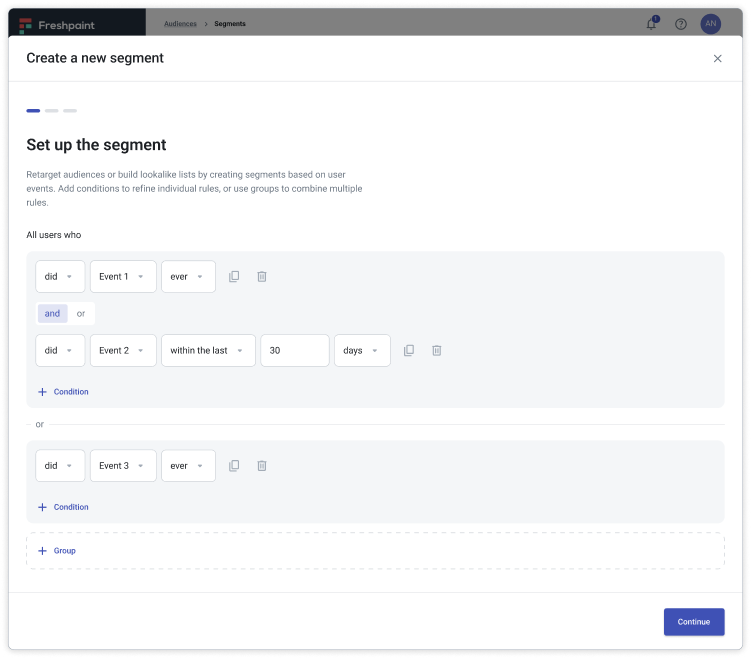
Advertising strategies with the lowest risk are broad category targeting practices. Low-risk targeting strategies include:
- Geo and demographic targeting: Reaching specific regions, age groups, or genders without using PHI
- Intent-based channels: Running search ads that engage patients actively researching care
- Contextual targeting: Placing ads alongside thematically relevant editorial content, like cardiology ads on heart-health articles
How to measure campaign performance without exposing PHI
Equally important to delivering campaigns is understanding what’s working. Healthcare marketers can analyze results without exposing PHI by measuring at the campaign level as opposed to the user level.
A conversion event has two components—that it happened and who it happened to. By designing event tracking that separates the conversion fact from the conversion identity, healthcare marketers can analyze the former without exposing the latter. Sophisticated teams are using methods such as server-side conversion APIs, aggregated conversion reporting, Media Mix Modeling (MMM), geo-holdout testing, and platform-native incrementality testing to measure impact at the campaign-level. Be sure to audit URLs, event names, and form fields for condition or treatment keywords that accidentally expose PHI.
Is retargeting HIPAA-compliant?
Retargeting is a powerful advertising tactic, but can carry higher HIPAA violation risk. Sharing data related to patients’ condition, treatment, or past behavior with third-party advertising platforms for retargeting campaigns is sensitive as it exposes information that likely includes PHI. When retargeting is strategically important, the safer path is broad, condition-agnostic audiences built based on general site visitation data rather than specific condition or treatment page behavior.
A Practical Roadmap for Running Compliant Marketing Campaigns
Now that we understand which advertising strategies are safe and which are risky, let’s walk through a practical roadmap for setting up HIPAA-compliant campaigns.
Step 1: Understand the specific data you collect and where it goes
Before launching any campaigns, catalogue what you’re collecting and where it’s being sent. This allows you to identify where your compliance risks are and which advertising strategies are viable.
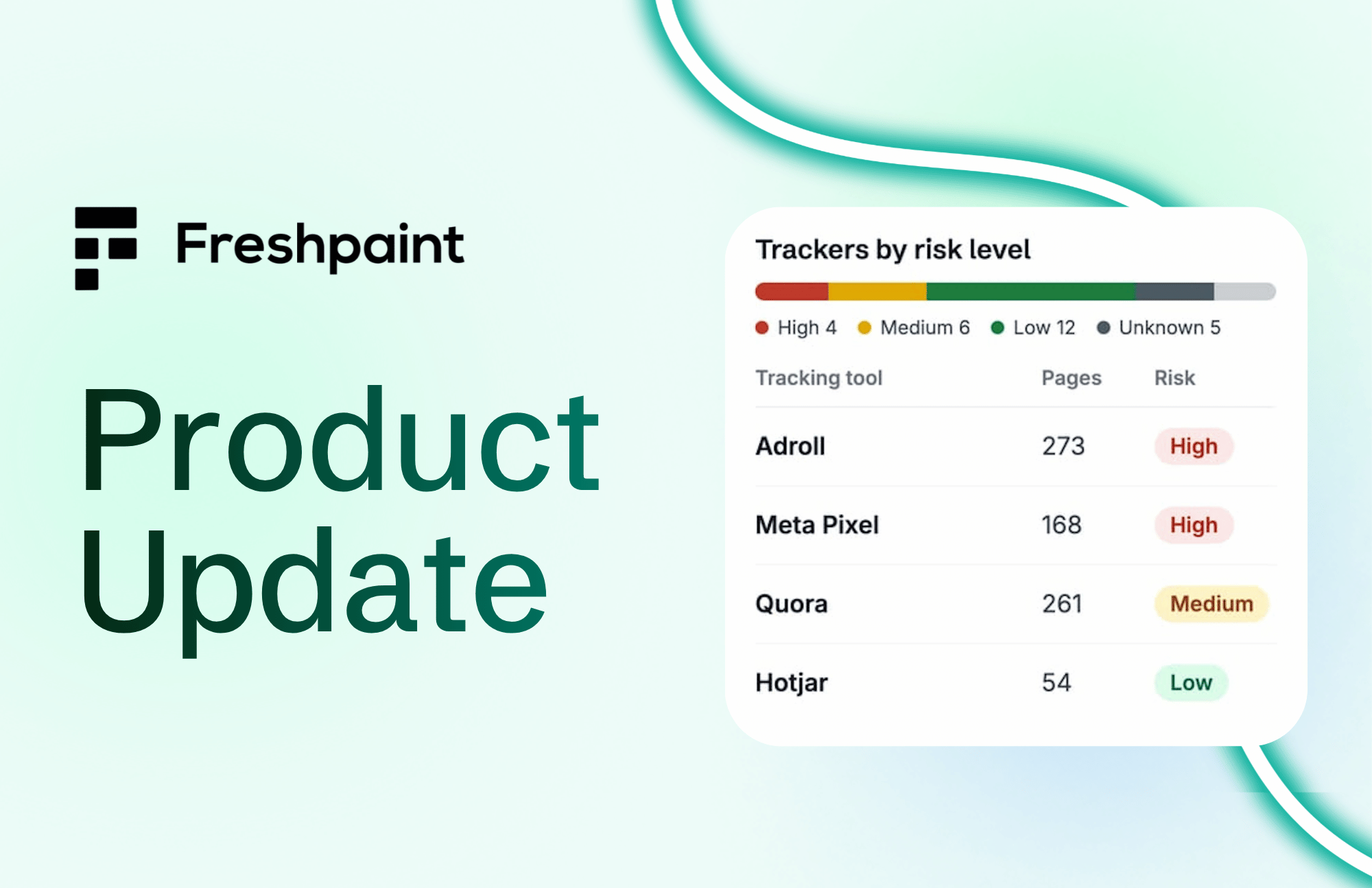
Begin by assessing the data coming into your systems. Review your sites and apps to understand what you’re collecting, and importantly, what constitutes PHI. Identify third-party pixels implemented across your properties and flag any that may be tracking PHI.
Next, catalogue the data leaving your system. Look at the data being sent to downstream systems, such as advertising platforms, CRM, and analytics tools, and identify any cases where PHI is being shared.
Step 2: Reduce common leak points
Once you have a map of your data flows, double-check for common leak points. Per HHS guidance, tracking user engagements on authenticated pages, URL parameters tied to identifiers, and form fields containing health information in combination with identifiable information can constitute PHI.
Healthcare organizations can collect this data for treatment, payment, and operations purposes, but it shouldn’t be shared with third-party platforms that aren't covered by a BAA.
Step 3: Add stronger control before data reaches ad platforms
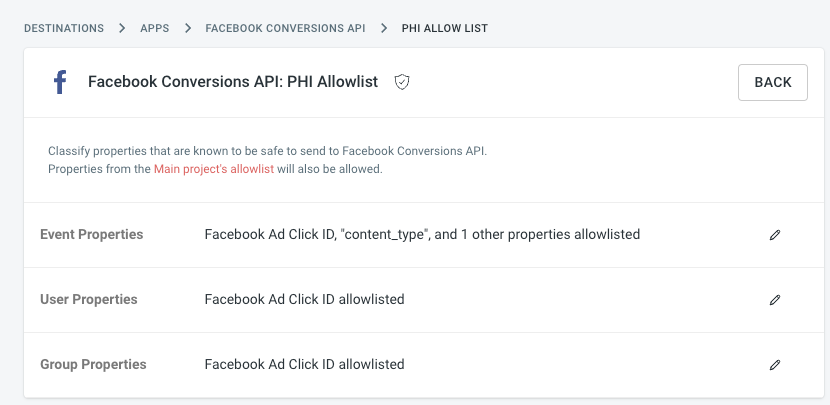
Next it’s time to establish control over what can be shared with third-party systems. The most reliable way is to route all outbound data through a dedicated compliance layer, like Freshpaint, and manage what data is sent downstream.
Freshpaint creates a “safe by default” layer that strips PHI from patient data before it is sent to tools like Google Ads and Meta. This added level of control enables you to run data-driven advertising campaigns—everything from demographic targeting to programmatic retargeting —without worrying that you’re exposing sensitive data.
Step 4: Keep performance and attribution in view
The final step is to close the feedback loop by measuring results. Design a process for understanding which campaigns are driving ROI, and share outcomes across the business to build trust.
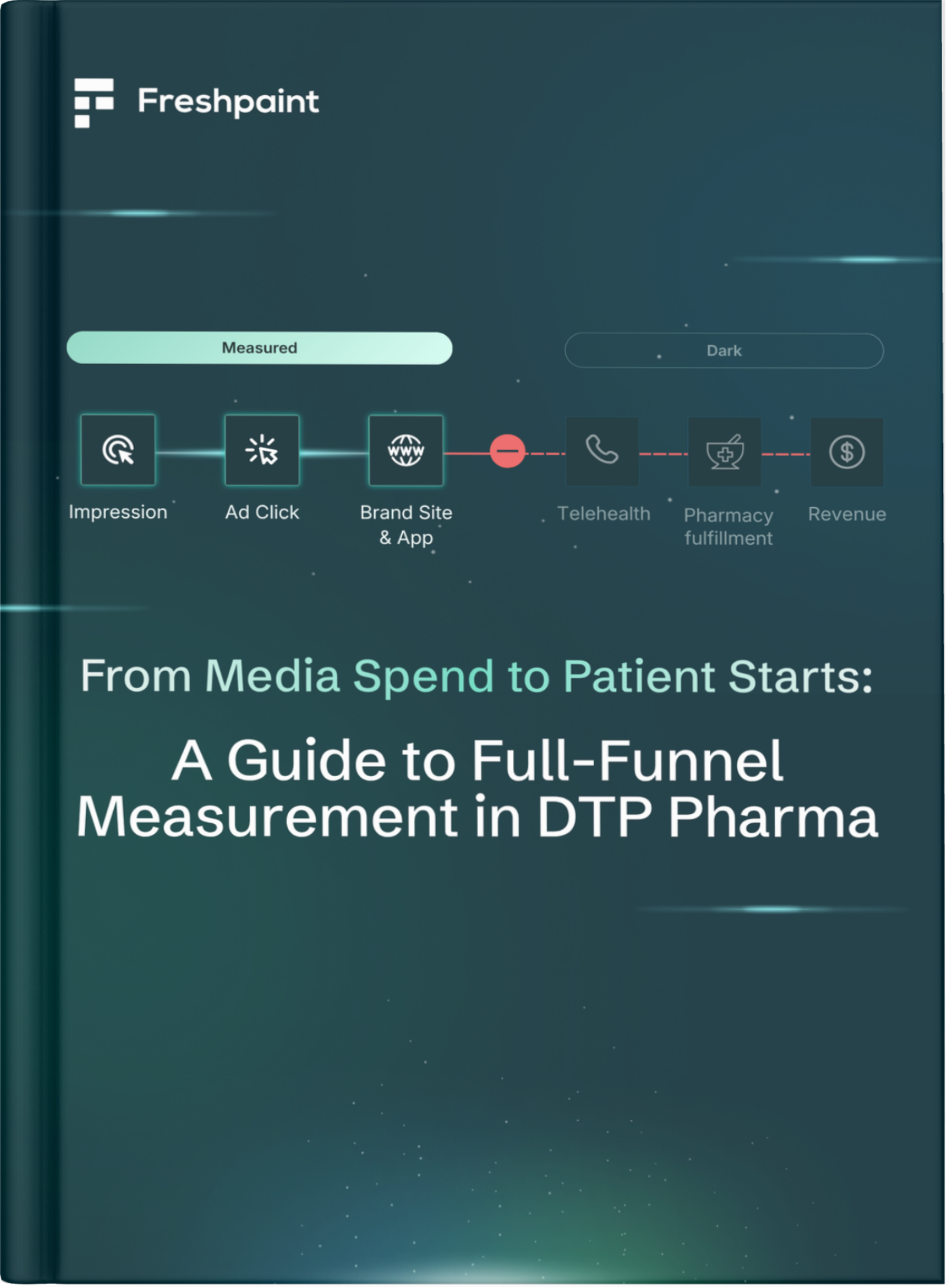
Build reporting with first-party data collected directly by your organization, and use server-side conversion APIs, like Google Ads Enhanced Conversions and Meta Conversions API, to send conversion data to ad platforms without exposing PHI in the browser.
Focus on understanding advertising campaigns’ influence on revenue-driving outcomes, like booked appointments, over vanity metrics like clicks. This will give you a more accurate sense of impact and help you build trust with leadership.
How Freshpaint Enables HIPAA-Safe Advertising with Reliable Attribution
Four out of five healthcare marketing leaders cite compliance and legal constraints as their biggest measurement obstacle. When seemingly every campaign carries risk and every report provides incomplete visibility into effective patient acquisition tactics, it’s impossible to drive growth.
Leading healthcare marketers are using modern technology, like Freshpaint, to take back control. Freshpaint acts as a secure gateway that helps prevent PHI from reaching non-compliant tools, while still supporting the measurement and signals marketers need to improve campaigns.
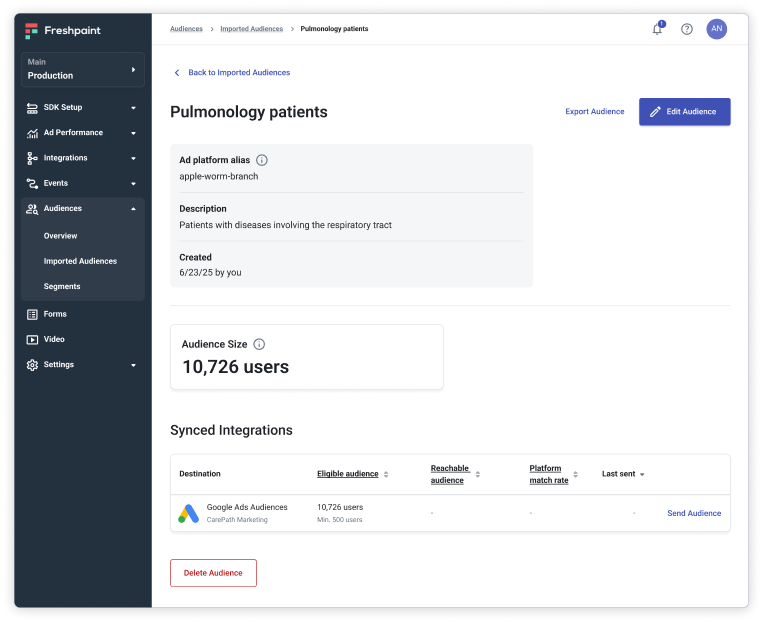
Once you have a clear view of the data you’re collecting and where sensitive data could be at risk, you can remove risky web trackers and use Freshpaint as your data control center—deciding what data gets shared externally and what doesn’t. That means you can transform privacy from a compliance hurdle into a performance advantage, proving ROI and scaling digital reach with confidence.
To learn more about how Freshpaint can power both privacy and performance in your advertising strategy, book a time to speak with our team.