The Hidden ROI Killers: Where Healthcare Marketing Success Dies



You drove a lead. Your front desk let it ring. You just paid $50 for silence.
This isn't a hypothetical. It's happening right now, across thousands of healthcare marketing campaigns that look successful on paper but collapse the moment a phone rings. The metrics say your ads are working—click-through rates are up, cost per lead is trending down, appointment requests are flowing in. But somewhere between the Google Ads dashboard and the actual schedule, your ROI evaporates.
The problem isn't your targeting. It's not your creative. It's not even your budget.
It's that healthcare marketing has spent years optimizing campaigns while ignoring the operational breakdowns that nullify all that work. And the gap between what marketing delivers and what operations converts is where millions in wasted spend disappears every year.
The Waste Nobody's Measuring
Blair Primis runs marketing for OrthoCarolina, one of the largest private orthopedic practices in the country. His team tracks every campaign, every channel, every lead. But the metric that keeps him up at night isn't click-through rate or cost per acquisition. It's something called "reasons not booked."
Every Friday morning, he opens a report that shows him exactly how many leads his marketing generated—and exactly how many his front desk failed to convert. "We essentially just tossed it out the window," he says, describing calls where patients asked to walk in, slots were available on the schedule, and the front desk said no anyway.
Walk-ins. Open appointments. Patient in pain. Paid marketing dollars. And the answer was "we don't accept walk-ins."
This is the first hidden ROI killer: you’re missing visibility into where your patient acquisition journey breaks down, leaving team members to navigate complex sales conversations they were never trained to handle.
Most healthcare organizations hire front desk staff to answer phones and manage schedules. What they don't realize is that in a performance-driven marketing environment, these team members have become the first—and often only—sales touchpoint in the entire patient journey. They're not just schedulers. They're the people who determine whether your $50 lead becomes a $5,000 procedure or a missed opportunity.
Allison Horn, who leads marketing for Imagen Dental Partners across 114 practices, describes the challenge plainly: "Front desk people are your first entry into talking to somebody. They don't have sales training and they're being asked to convert a patient and tell a prospective patient what the value proposition is of why they should come and select your office."
Think about what you're asking them to do when that phone rings:
- Articulate your practice's value proposition against competitors they've never researched
- Handle pricing objections for procedures they don't understand
- Overcome insurance concerns they weren't trained to navigate
- Close the appointment despite having no sales framework or script
- Do all of this while managing an existing patient standing at the desk
Is it any wonder conversion rates are stuck at 50%?
The Yield Gap That's Destroying Your Budget
But the operational breakdown doesn't stop at booking. There's a second, even more expensive problem that most healthcare marketers don't even have language to describe.
Blair calls it "the yield gap."
Here's how it works: A patient comes in. They're diagnosed with a condition that requires surgery. The physician recommends the procedure. The patient says they'll think about it. And then... nothing. They disappear. No surgery scheduled. No follow-up. No conversion.
Look at what you actually measured in that patient journey:
- Marketing metric: Lead generated
- Operations metric: Appointment attended
- Revenue metric: $0
From a marketing perspective, you drove the patient. From an operational perspective, you saw the patient. But from a business perspective, you generated zero revenue.
"That is our cart," Blair explains, comparing it to e-commerce abandoned cart recovery. "That is our version of the—you left something in the cart. How can you target the space between diagnosed for surgery and didn't come in for surgery?"
This is the second hidden ROI killer: healthcare marketers are optimizing for bookings and attended appointments, but the real revenue happens at conversion—and nobody's measuring the gap in between.
For dental practices, this shows up differently. Julie Elias, who directs marketing for Boston University's School of Dental Medicine, sees it in their comprehensive care patients. "That first appointment is a three hour long appointment. Are they gonna come back after that? I don't know."
The cycle repeats across specialties. Patients book. Some attend. Fewer convert. And marketing gets measured on the first number while operations gets measured on the last one, with no shared accountability for the massive yield loss happening in the middle.
The worst part? Most healthcare marketers can't even quantify this gap.
They know:
- Cost per booked appointment
- Maybe their show rate
- Possibly cost per attended appointment
But they don't know:
- Percentage of patients diagnosed for high-value procedures who never scheduled them
- Percentage of initial consultations that never led to treatment
- Revenue loss from the yield gap versus revenue loss from campaign underperformance
- Which service lines have the highest diagnostic-to-conversion rates
That's not a campaign problem. That's a visibility problem. And it's costing you a fortune.
When Marketing and Operations Speak Different Languages
The third hidden ROI killer is the most insidious because it's invisible until someone points it out: marketing and operations are working toward the same goal but speaking completely different languages.
Marketing talks about ROI, ROAS, cost per acquisition, conversion rates. Operations talks about efficiency, capacity, waste, and throughput. When marketing says "we need to drive more volume," operations hears "you want to disrupt my schedule." When operations says "we're at capacity," marketing hears "you're blocking my growth."
But here's what Allison and her team discovered: the breakthrough isn't teaching operations to speak marketing. It's teaching marketing to speak operations.
"You both listed something really interesting," the moderator observed toward the end of the panel, "which was you turned how you were communicating on its head into that language that operators think of, which is waste."
Operations teams are intimately familiar with waste. Unused appointment slots. Staff idle time. Equipment sitting dormant. Patients who called but didn't schedule. These are operational failures that show up in utilization metrics and capacity reports.
So when marketing reframes campaign performance not as "we drove 200 leads" but as "here are the 80 leads operations failed to convert, representing $50,000 in wasted opportunity"—suddenly, everyone's paying attention.
This language shift does something crucial: it moves the conversation from blame to shared accountability. Marketing isn't saying "you're not converting our leads." Operations isn't saying "you're driving the wrong patients." Instead, both teams are looking at the same data and asking: where is our system breaking down, and how do we fix it?
At Imagen Dental Partners, this led to something radical. They don't have a marketing department and an operations department. They have a growth department. "Marketing and operations are called a growth team," Allison explains. "We're all charging towards the same thing."
This structural integration matters because it forces the visibility problem into the open. When marketing and operations share KPIs, share data systems, and share accountability for outcomes, the yield gap stops being someone else's problem and becomes everyone's priority.
The Technology That Makes Waste Visible
None of this matters if you can't see where the breakdowns are happening. And for years, healthcare marketers couldn't. Then AI call tracking changed the equation.
Allison describes the old way: "When I hired Kelly, I was like, your job for this day is you're gonna listen to every single phone call that came in and you're gonna say it was new and booked or not. And she was like, torture."
Now, AI listens to every call automatically. It tracks disposition: new patient or existing? Booked or not booked? If not booked, why not? What marketing channel did they come from? Who took the call?
Blair uses the same technology. Every Friday morning, he opens his "reasons not booked" report and sees exactly where the system is failing:
- Patients asking for walk-in appointments when slots are open—but front desk says no
- Calls going to voicemail during business hours because staff is overwhelmed
- Prospects choosing competitors because front desk couldn't articulate value
- Insurance questions handled poorly, sending qualified patients elsewhere
"It becomes an education tool in a really interesting way," he says. The data doesn't just identify the problem. It creates accountability. When the front desk can see—in real time—that they're the reason a marketing-generated lead didn't convert, the conversation shifts. It's not marketing's fault the campaigns aren't working. It's not operations' fault the leads are low quality. It's a system failure that everyone can now see and fix together.
Some organizations are taking it further. Imagen Dental Partners is piloting an AI agent—they call her Tina—who answers calls and books appointments. "Tina saw an appointment open and Tina's gonna fill it," Allison says. No training required. No objection handling to teach. No human error. Just consistent, optimized conversion.
Tina's now deployed across four offices. More practices are requesting access. Because the feedback loop is immediate. Tina books appointments more efficiently and with higher show rates than human front desk staff who've never been trained in sales techniques.
This is what happens when you make waste visible. Operations can't ignore it. Leadership can't dismiss it. And suddenly, the barrier to better ROI isn't budget or campaigns—it's training, systems, and accountability.
Building the Visibility Layer Healthcare Marketing Needs
If you're reading this and recognizing your organization in these patterns, here's the uncomfortable truth: your campaigns might actually be working. Your targeting could be perfect. Your creative might be exceptional. But without visibility into what happens after the lead is generated, you'll never know if your ROI problem is a marketing problem or an operations problem.
Most healthcare marketers are trying to optimize campaigns while flying blind through the rest of the funnel. They can tell you cost per click. Maybe cost per lead. If they're sophisticated, cost per booked appointment. But cost per attended appointment? Cost per diagnosed patient? Cost per actual conversion?
That's where the real ROI lives. And it's invisible to most organizations.
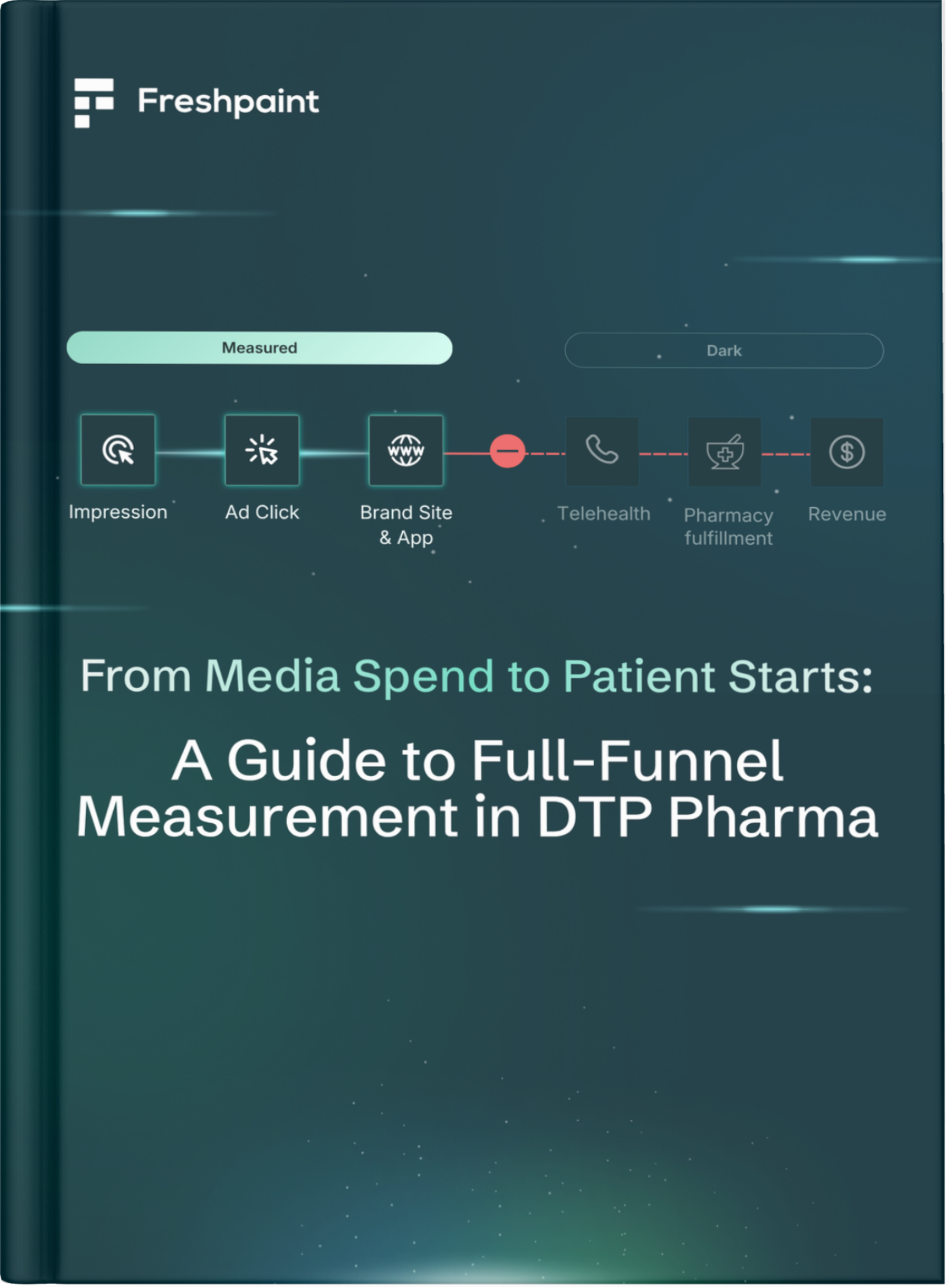
The healthcare marketing teams that are winning aren't just running better campaigns. They're building better visibility systems. They're tracking the entire funnel—from ad impression to attended appointment to actual revenue. They're connecting marketing data with operational outcomes so both teams see the same truth. They're identifying yield gaps and closing them. They're making waste visible so it can be eliminated.
Here's what that actually looks like:
Unified tracking across the entire patient journey. Not just clicks and bookings, but attended appointments, diagnoses, and completed treatments. Marketing and operations looking at the same data, measured the same way, with no debate about which numbers are "real."
Down-funnel measurement that reveals where value gets created or destroyed. The ability to see not just that you drove 200 leads, but that 150 booked, 100 attended, 60 were diagnosed for high-value procedures, and only 30 converted. That yield gap—the 30 patients who disappeared between diagnosis and treatment—that's your real optimization opportunity.
Privacy-first infrastructure that connects campaign performance to actual outcomes. Because in healthcare, you can't just throw pixels on everything and hope compliance doesn't notice. You need measurement systems built for HIPAA from the ground up, where privacy and performance reinforce each other instead of competing.
Your front desk isn't trying to sabotage your marketing budget. Your operations team isn't trying to block your growth. But without the visibility to see where the system is breaking down—and the infrastructure to fix it—you'll keep optimizing campaigns while your ROI dies somewhere between the phone ringing and the appointment being scheduled.
The organizations that have figured this out aren't flying blind anymore. They know exactly where their marketing dollars are working, where operational breakdowns are killing conversion, and where the yield gaps are costing them revenue. They've stopped arguing about whether marketing or operations is the problem because they can finally see where the system is failing.
If you're ready to stop wasting marketing dollars on invisible operational breakdowns, learn how Freshpaint helps healthcare marketers optimize their marketing motion based on true ROI.