The New Foundation for High-Performance Pharma Marketing
.jpg)



For years, pharma organizations treated privacy as a compliance function, a final sign-off that happened before a campaign launch.
That model no longer works.
Today, privacy decisions directly influence campaign performance, speed to market, measurement, and media optimization. What was once a legal consideration has become a marketing growth constraint. The friction is creating measurable marketing drag: signal loss across the direct-to-patient journey, abandoned advertising channels, and launch delays caused by manual approval cycles instead of automated governance.
It would be a mistake to see this as a conflict between marketing and privacy. As new research shows, both teams are trying to accomplish the same thing: enable the effective, compliant use of patient data. They're simply working without the shared infrastructure that allows both goals to coexist. When your patient data foundation isn’t built to support modern privacy requirements, both teams suffer. Marketing and privacy aren’t stuck in a turf war—they’re lost in a communication breakdown. Here’s why it exists and how to solve for it.
Key Takeaways
- Marketing and privacy share the same goal. Both teams want to enable compliant, data-driven patient engagement, but disconnected systems and inconsistent data governance prevent them from working toward that goal together.
- Compliance workarounds come at a performance cost. Patchwork solutions like avoiding ad platforms, relying on manual reviews, or limiting data collection may reduce risk, but they also slow launches, weaken measurement, and reduce marketing effectiveness.
- Shared infrastructure eliminates the trade-off. A unified, privacy-first data foundation automates compliance, protects sensitive health data, and restores the measurement, attribution, and activation capabilities marketers need to drive growth.

Marketing and Privacy Have a Translation Problem
Evolving privacy requirements are already affecting pharma marketers’ ability to deliver engaging direct-to-consumer and direct-to-patient campaigns and measure ROI. At the same time FDA has updated requirements around consumer-facing prescription drug advertising, increasing the complexity of launching compliant campaigns.
The DigiPharma Insights/Freshpaint 2026 DTP Pharma Benchmark Survey uncovered that 100% of pharma marketers surveyed say privacy constraints are impacting performance, yet only 1% describe their ecosystem as fully integrated and privacy-compliant. Meanwhile, 62% of surveyed privacy leaders have only partial visibility into how data flows through marketing’s pixels and analytics tools. In the survey of 200 pharma marketing and privacy leaders, 59% of marketers said compliance concerns are delaying or changing their initiatives, citing audience targeting, speed to launch, and channel selection as the most-impacted areas. They want a solution that will enable them to deliver the data-driven programs they once could, without compromising compliance with the regulations they’re now subject to.
Privacy leaders, it turns out, aren’t huge fans of case-by-case compliance reviews either. They want automated consent enforcement and governance controls that make it possible for teams to leverage patient data without necessitating repetitive manual work on their end. Both teams are looking for the same solution: automated compliance controls that enable marketing to run data-driven programs at scale without manual compliance reviews. They’re just using different language to describe it.
As Mason Fitch, special counsel at Kelley Drye & Warren LLP, explains, "What both teams also need, but rarely have, is a shared language for data classification — so marketing, privacy, and legal are talking about the same categories of data and the same obligations, rather than each team operating on its own definitions."
Temporary Compliance Solutions Have Long-Term Marketing Costs
One of the foundations holding back marketing and privacy from speaking the same language is a governed data layer that privacy trusts. Without it, marketing is left piecing together short-term workarounds to meet evolving compliance requirements.
Just consider:
- 67% of surveyed pharma marketers are avoiding certain ad platforms altogether to prevent sensitive health data from being exposed
- 63% are building server-side tagging workarounds internally, often with heavy dependence on IT
- 54% are abandoning identifiable patient data and using anonymized data exclusively
But these workarounds don’t eliminate compliance costs; they simply repackage them as marketing inefficiencies, creating a compounding tax that makes it increasingly difficult to launch campaigns efficiently, measure ROI, and demonstrate marketing’s impact on business outcomes.
The privacy team, meanwhile, has to double-check every campaign to make sure the patchwork solutions are holding up. They’re often saying "no" due to a growing backlog, the lack of automated reviews, and a need to re-check the data and the latest privacy requirements before each launch.
As one pharma marketing leader put it, "The constant back and forth drains the team's momentum and slows innovation, leading to more conservative and less effective campaigns."
While short-term compliance workarounds may prevent a costly lawsuit, their long-term performance impacts can be just as detrimental.
The Solution Isn’t Better Dialogue; It’s Better Infrastructure
Only 1% of pharma marketers describe their ecosystem as fully integrated and privacy-compliant. That 1% didn't hire a better translator between the two teams. They built the foundation first. It’s a shared data infrastructure that enables marketing and privacy to work together amicably.
A unified data foundation enables pharma marketers to make faster decisions, spend more efficiently, and increase speed to market by:
- Minimizing data at the point of collection,
- Enforcing consent automatically,
- Generating immutable audit logs, and
- Prevents health-related data from being shared with third-party ad platforms.
Meanwhile, privacy can rest assured knowing that automated guardrails prevent the activation of sensitive health data.
With a shared infrastructure in place, marketing and privacy find common ground.
We recommend they align on the following operational processes:
- Proactive data-flow mapping before launch, not auditing after the fact
- Privacy involved as a campaign constituent from the start, vs. a late-stage reviewer
- Data teams as a partner to assess which data points are sent across tools and vendors, closing the partial-visibility gap both marketing and privacy operate in today
Bring High-Performance Marketing Back to Your Organization
Alignment between marketing and privacy isn’t a negotiation; rather, it’s an infrastructure decision. The pharma marketing teams that invest in a unified foundation stop seeing privacy compliance as a trade-off, and start seeing it as a competitive advantage.
Leading organizations are developing that foundation with Freshpaint, the only platform purpose-built to solve privacy and performance simultaneously for pharma.
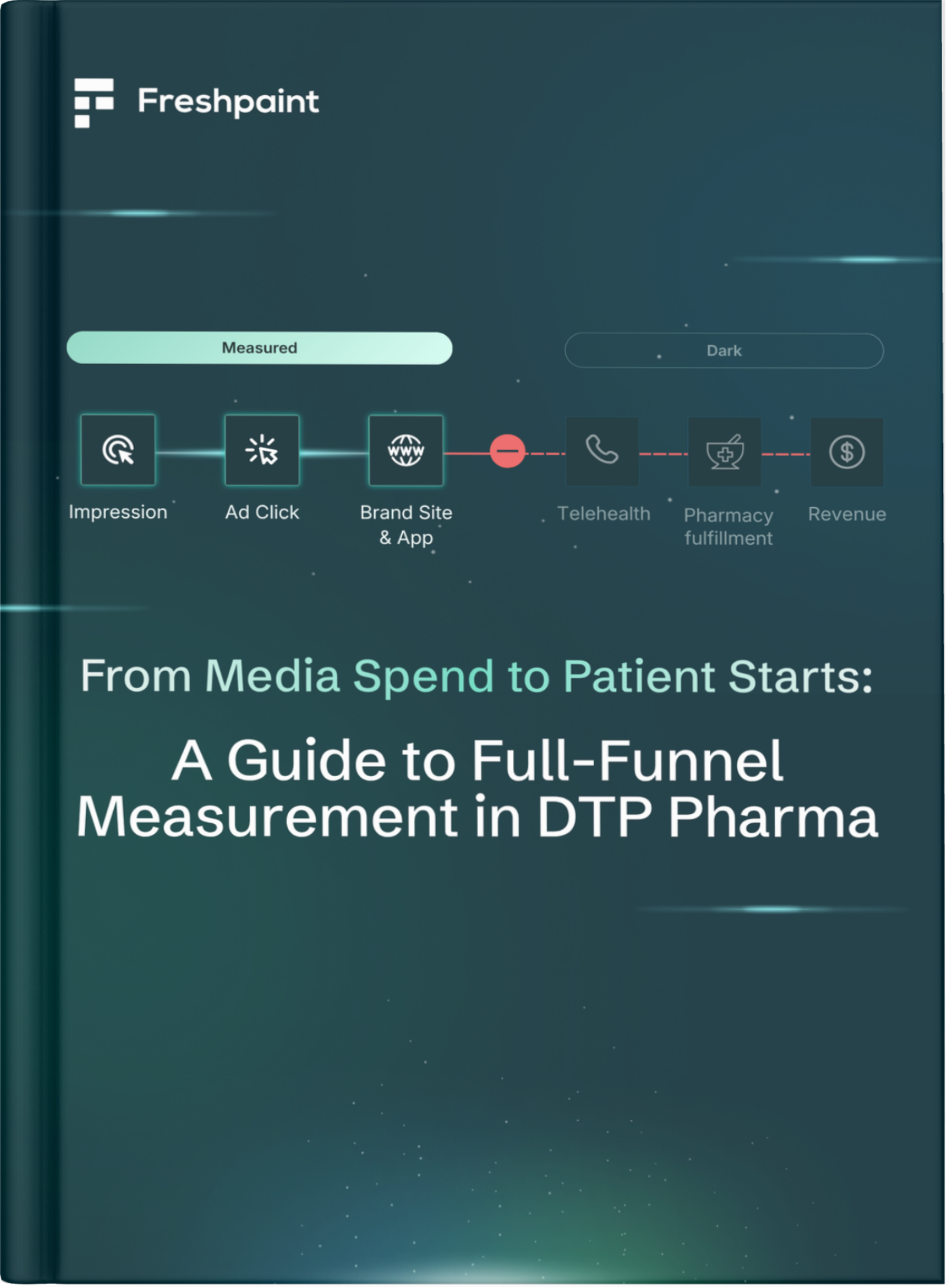
Freshpaint’s safe-by-default architecture means sensitive health data is removed before it ever reaches third-party tools. This enables compliant conversion signaling, full-funnel direct-to-patient attribution through online pharmacy and telehealth handoffs, and restored access to the ad platforms that workarounds force teams to abandon.
Freshpaint doesn't ask pharma teams to choose between compliance and performance. We remove the trade-off and let you choose.
Get the 2026 DTC/DTP Pharma Benchmark Report.
See how your peers are navigating privacy and performance and what the data reveals about what actually works. [Download the report]
See what a compliant, high-performance marketing foundation looks like. Schedule a demo.







.png)