Top Challenges Healthcare Marketers Want to Solve in the Next 12 Months (and How to Do So)




What is the toughest challenge or goal you and your team must solve in the next 12 months?
We recently asked this question to 88 healthcare marketing leaders who attended our House Call Laguna Beach event, and then again in our most recent Freshpaint 5 industry newsletter. The answers came in from health systems, multi-location specialty practices, community health centers, behavioral health organizations, health tech companies, and more, and, refreshingly, respondents did not hold back.
- “Proving out the impact of our ad spend (!!!!!!!!).” (The exclamation points were theirs.)
- “Success means structured governance over website tracking and increased compliance while maintaining the metrics and data the business needs to scale.”
- “As always, operating income is the ultimate performance indicator for health systems and due to our limited reimbursement models, cost reduction plays an unusually elevated role.”
Attribution came up more than any other theme at House Call, but when we asked readers of our weekly Freshpaint 5 newsletter to pick just one challenge, growing patient volume without overspending came out on top. Read together, the two sets of answers point to the same goal from different directions: marketers need more patients and members, and they need to prove marketing is the reason they arrived.
The Top Five Challenges, in Healthcare Marketers’ Own Words, and How to Make Progress on Each
Challenge 1: Proving marketing ROI beyond the booked appointment
Attribution was the single most common challenge in our House Call survey, named as the top priority by 23 respondents and mentioned in some form by more than a third of everyone we heard from.
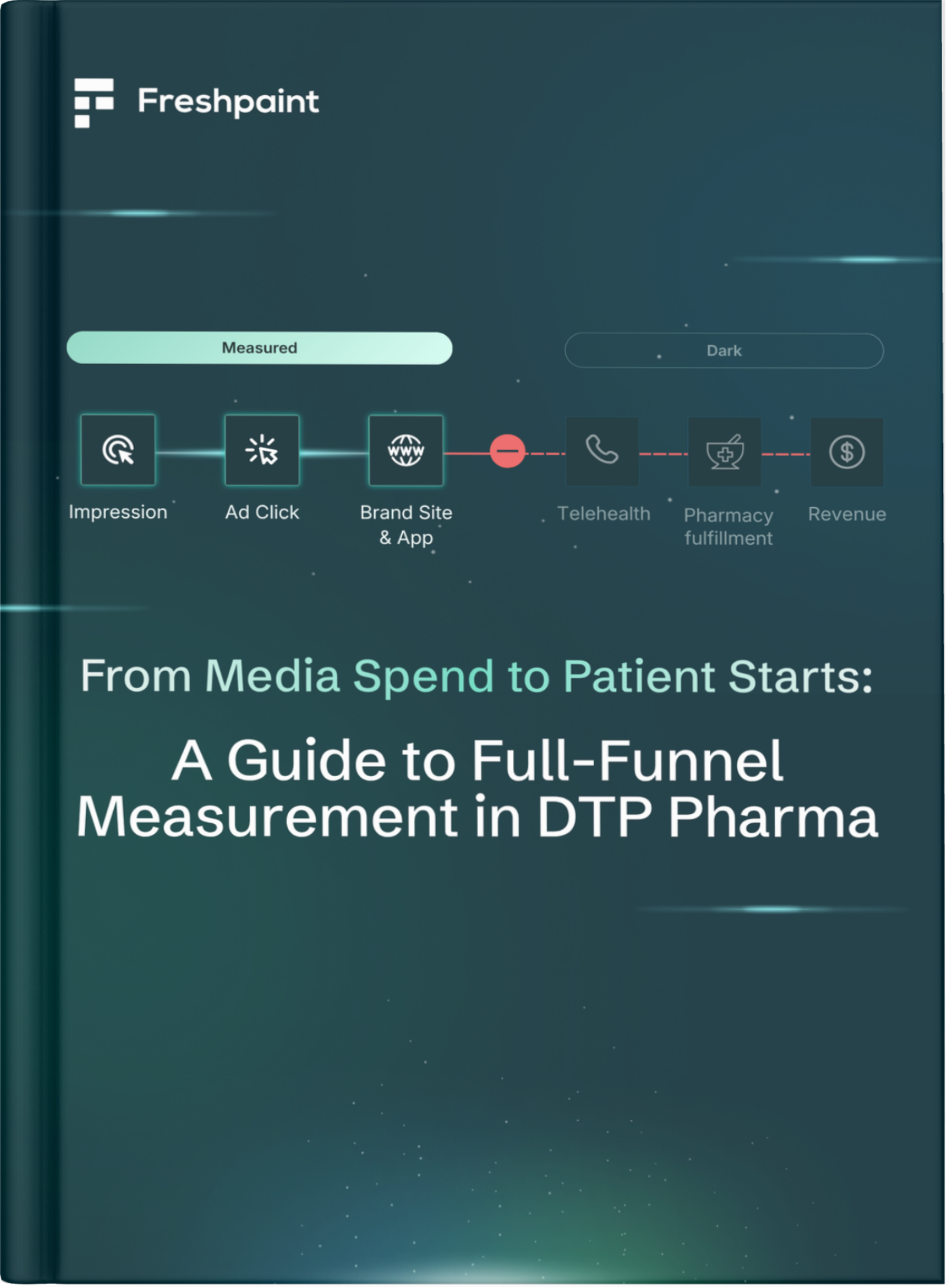
What stood out was how far down the funnel people would like to see. Clicks and form fills no longer satisfy leadership, and many teams are now expected to connect spend to appointments that were kept, billed, and in some cases followed by a procedure months later.
“We have to be able to track through the full funnel of our booked, kept, and paid appointments, both online and through our call center, to be able to attribute appointment revenue appropriately to marketing campaigns.”
The gaps respondents described tend to appear at the handoff points: when a patient leaves the website for a scheduling portal, picks up the phone, or comes back for follow-up care that no campaign report ever sees.
One leader told us their call tracking vendor “is only showing us 25% of all calls coming in.” Another described a clinic with healthy online scheduling volume and no visibility into what happens next:
“Our main goal we would like to unlock is how many patients (that initially booked their first appointment online) end up having a procedure that would better assist us with ROI.”
How to Improve Your Attribution
- Change the conversion you report on. If your scoreboard is still form submissions, you’re unable to speak finance’s language. Moving the primary metric to booked appointments, attended appointments, or cost per attended appointment enables you to come to leadership conversations with a number they actively track — and are eager to influence. That level of reporting typically requires a compliant connection between your scheduling or EHR data and your marketing data. For teams on Epic, our on-demand session How to Safely Optimize Ads from Appointment Data in Epic with OrthoCarolina walks through exactly how to bring that to life.
- Don’t hang up on phone calls. For many service lines, the call center is where most bookings happen, and it is often the least-measured channel. In fact, only 9% of healthcare marketing teams have integrated call-center data into their measurement, according to our industry research. Treating calls as first-class conversions closes one of the largest blind spots in healthcare attribution.
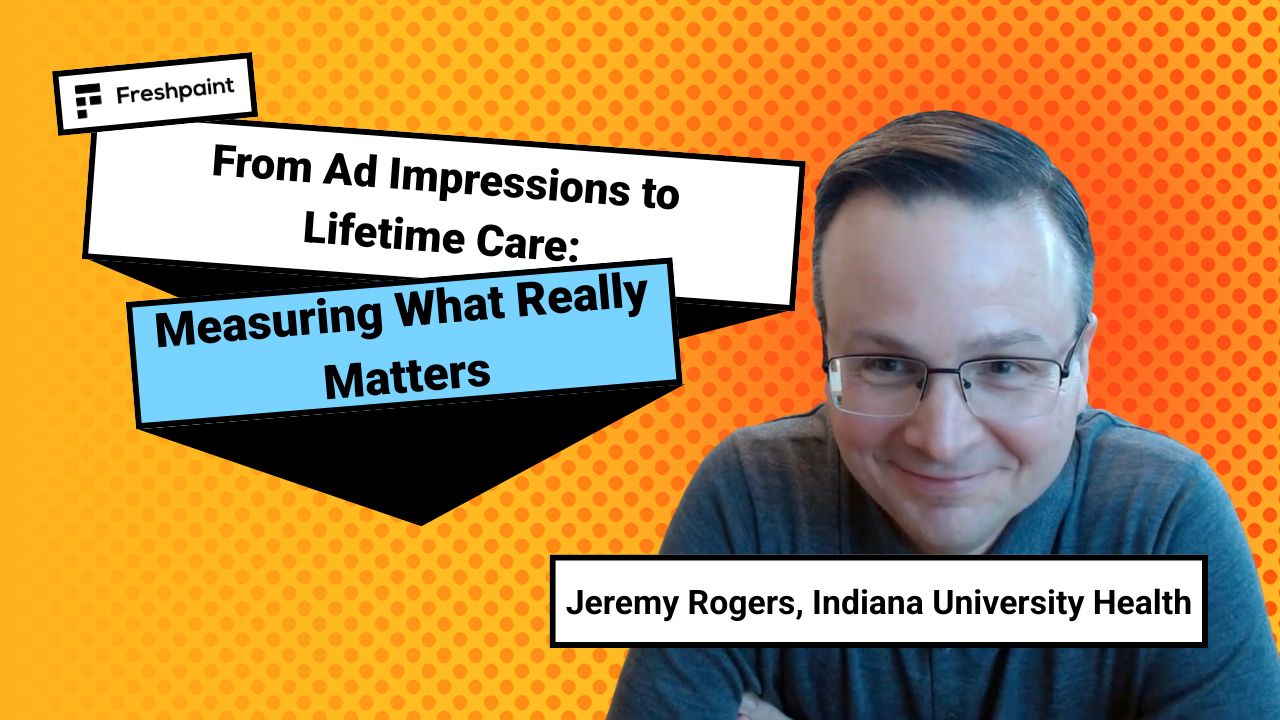
- Measure the relationship, not just the first visit. Patients rarely move through a single funnel; a primary care visit can lead to a specialist referral, a procedure, and a physician/patient relationship that continues for years. A view of lifetime value enables marketing to shift its investment toward the most influential care moments instead of one. See exactly how Indiana University Health shifted from acquisition-first marketing to a lifecycle model, and connected marketing spend to outcomes that resonated with the organization’s finance and clinical leaders.
As one respondent summed it up: “Ultimately, we need to know where to invest the next dollar to drive profitable, incremental growth.” For a deeper look at closing this gap, the on-demand webinar The Attribution Gap: Measuring How Patients Really Find You is a useful next step.
Challenge 2: Staying Compliant Without Losing the Ability to Market
Sixteen respondents in the House Call survey named privacy and compliance as their top challenge, but the theme ran much wider than that. About a third of all responses mentioned HIPAA, consent, privacy law, or legal review, and most of them framed compliance the same way: the condition attached to every other goal.
Teams want to scale media, improve attribution, and adopt new tools “while remaining compliant,” and the hard part is that the definition of compliant keeps changing.
“The toughest challenge in the healthcare space is building scalable consent and data-classification infrastructures that keep pace with the incoming HIPAA Security Rule overhaul and the growing patchwork of state health privacy laws, rather than reacting to each new requirement in isolation.”
For organizations in states with stricter rules, the pressure can push toward an all-or-nothing answer. One marketing leader operating in such a geography described internal skepticism about whether tracking is worth the risk at all, and asked plainly: “Do we just not track?”
Others described the daily negotiation between marketing and legal, including the need to find “a solution that pleases legal and mitigates risk while still being able to effectively optimize campaigns with on and off site data.”
How to Use Privacy to Fuel Your Performance
- Build a privacy framework, instead of reacting law by law. The organizations that handle new regulations most confidently have already decided how they classify sensitive data, the campaigns and events that carry risk, and the stakeholder who signs off on changes. Making that a shared, ongoing process across marketing, privacy, legal, compliance, and IT is far more durable than a yearly audit, an approach we explored in Web Tracker Monitoring for Today’s Privacy Landscape.
- Make consent something your systems enforce, not just record. Many cookie banners capture a visitor’s preference without stopping the data from flowing downstream, which leaves organizations exposed while believing they are covered. Cookie Consent Tools: The Big Legal Blind Spot in Healthcare Marketing breaks down where that gap shows up.
- Reframe compliance as the thing that lets you move faster. “Do we just not track?” is an understandable reaction, but as our Privacy Strategy Lead, Xan Spewak, says: The answer to privacy risk isn’t necessarily to shut off your paid media. Instead, it’s to build the privacy-first data foundation that enables you to fuel stronger performance; just take a look at the healthcare marketers who used HHS’s 2022 guidance to future-proof measurement, and accidentally came out stronger.
Challenge 3: Growing Patient Volume Without Paying More For It
This was the top pick among Freshpaint 5 readers, and over a dozen House Call respondents also put growth as their core goal to tackle: more patients, at a cost the organization can sustain. The context they described is not easy. Several pointed to a shrinking top of funnel, rising competition from larger systems entering their markets, and reimbursement pressure that makes every marketing dollar harder to justify.
“It is more critical than ever to build a moat around our markets to maintain and grow market share. We need to do this at more efficient investment levels.”
What was notable is how many teams are focusing on retention and expansion versus net-new acquisition. Rather than asking for more leads, they want to convert the demand they already have, whether that means fewer drop-offs in online booking or more patients actually showing up.
One respondent described the goal as “reversing the top-of-funnel decline without buying more expensive leads across 12 facilities,” while another put it even more simply:
“Converting leads, not just driving lead volume. Need to solve for how we can do better at converting people once they are in the funnel.”
How to Convert More Patients and Members Without Increasing Spend
- Fix the leaks before buying more traffic. If a meaningful share of visitors abandon the booking flow, every new campaign inherits that loss. Funnel analysis, on-page surveys, and session-level behavior are key capabilities to understand exactly where patients get lost or confused on your website, often in places like insurance questions, provider selection, or a handoff to a scheduling portal.
- Treat show rate as a marketing metric. A booked appointment that never happens costs the same to acquire as one that does. When ad platforms learn from attended visits rather than bookings (or even bookings versus clicks), they start to favor the audiences most likely to follow through, which improves both acquisition cost and clinic utilization. That is the thinking behind optimizing ads on attended appointments rather than form fills.
- Connect growth plans to the financial reality. With reimbursement under pressure, the marketing teams that keep their budgets are the ones that tie their plans to the service lines and markets leadership is already prioritizing. Healthcare Marketing’s Playbook for the 2027 Medicaid Changes looks at how to position marketing as a growth partner as those changes take effect.
Challenge 4: Getting More From Media Spend in a Lower-Signal, Multi-Location World
One of our House Call respondents acknowledged how familiar this goal sounds: “Scaling paid media efficiently (surprise!).”
What has changed is the environment around it. Teams are working with third-party attribution data that tends to favor itself, more locations and brands, and ad platforms that optimize toward whatever signal they are given, which is not always the outcome the organization needs.
The clearest example came from a multi-location provider that consolidated its campaigns, only to find that spend drifted toward the regions with the cheapest leads rather than the clinics with room to see patients:
“This often results in strong pipelines where we have no capacity to enroll and weak pipelines where we have capacity to enroll.”
That team moved to location-level ad accounts to regain control, at the cost of a higher blended acquisition cost, and closed with a question many readers will recognize: “Would love to understand best practices for allocating spend across a 20+ clinic portfolio.”
Others described the same squeeze from a different angle, with the goal of, “improving digital ad performance without third-party tracking or analytics.”
Notably, teams don’t respond to this squeeze by pulling back. According to our 2026 State of Healthcare Marketing report, when budgets tighten, 87% of healthcare marketers say their first move is to improve efficiency of their ad spend rather than cut campaigns.
How to Optimize Your Media Spend
- Optimize toward outcomes, not proxies. Ad platforms are only as smart as the signals they receive. When the only conversion they see is a form fill or a booking, their algorithms chase the cheapest version of that event – even if those patients never show up or try to book at a clinic with no openings. By sending privacy-safe, lower-funnel signals like attended appointments and revenue back to the platforms, you teach them to find the patients who convert.
- Rebuild signal from your own first-party data. Losing third-party tracking doesn’t have to mean you give up on targeting. Compliant retargeting, lookalike, and exclusion audiences built from first-party data replace much of what pixels used to provide, without sending protected health information to ad platforms. For a real-world example, see how a payer marketing agency drives enrollment when pixels are off the table.
- Measure new channels on the same terms as search. Teams that only trust search often under-invest in channels that build demand, simply because those channels are harder to measure. Holding every channel to the same downstream outcome makes it easier to test with confidence, as we discuss in Beyond Google: The Multi-Channel Playbook for Healthcare Marketers.
Challenge 5: Building a Data Foundation You Can Trust
Finally, many respondents noted their biggest obstacle sits underneath everything else: the data itself. Before they can prove ROI or optimize media, they need tags that fire correctly, parameters that are populated, and systems that talk to each other. One leader was refreshingly direct about where things stand:
“Our tracking is a mess. Once we can get a solid foundation of accurate and complete data … we can focus on the insights that can influence ROI.”
Others describe the same need, asking for “accurate, reliable data” and “accurate reporting for digital.” For many teams, the foundation is being rebuilt mid-flight. One summed up the scale of the work as “modernizing marketing technology and online content for a complex healthcare giant.” HealthTrust’s experience building out more than 1,300 events in its first year working with Freshpaint shows what that discipline makes possible: marketers managing analytics on their own and uncovering visitor patterns that reenvisioned their content strategy.
How to institute a compliant, trusted marketing data foundation
- Close the gap between the website and the EHR. Most attribution blind spots in healthcare trace back to the moment a patient moves into a scheduling or EHR environment. Server-side, BAA-covered integrations with scheduling and EHR systems let that data rejoin the marketing picture without sending sensitive information downstream.
- Leverage a trusted privacy-first healthcare marketing platform. A reliable first-party data layer unlocks outcomes like Allergy Partners reducing its cost per lead, OrthoCarolina unlocking marketing as a growth lever, and one specialty provider (finally) being able to present clear evidence of marketing’s business impact to leadership.
- Make your data work for you, not the other way around. A trusted data foundation enables marketers to spend less time analyzing and more time acting. For Freshpaint’s customers, Freshpaint AI is transforming the tasks their teams spend time on. As one multi-location regional health system customer put it: “Freshpaint AI is providing 50% time reduction on analytics tasks. Previously hour-long GA4 queries are now completed much faster.”
One more theme is worth watching.
You know we couldn’t leave this conversation without mentioning the “A” word. Only a handful of respondents named artificial intelligence as a top challenge, but several mentioned AI, AEO, or the shift in search, usually alongside a privacy concern.
As one leader observed, “As AI continues to take up more share of the search volume, website traffic continues to shrink.” Another described the hardest part of adopting AI as “confidently drawing the line between what AI can safely handle and what patient data has to stay out of.”
We expect that tension to move up the list in the coming months.
One Thing Ties Healthcare Marketers’ 2026 Challenges Together
Read side by side, these five challenges are really the same problem viewed from different angles: Healthcare marketers are being asked to prove their impact in business terms, with less signal and more regulatory scrutiny than ever.
The teams making the most progress treat measurement, compliance, and data quality as a single foundation that fuels performance, rather than three separate projects.
If any of these challenges sound familiar, you’re in good company.
We are working side-by-side with our customers to solve these exact challenges — and your feedback directly impacts the new features we roll out.
And if this survey sparked a reaction, let’s keep the conversation going. The Freshpaint 5 brings the healthcare marketing news worth your time to your inbox each week, along with quick polls like the one that shaped this post, so your inputs can steer what we cover next. Subscribe to the Freshpaint 5 and check out our latest insights here.