What to Look for in a Healthcare Marketing Platform Partner
.jpg)



For a long time, healthcare marketers operated under a pretty limiting assumption: if you wanted to stay on the right side of privacy and compliance, you had to accept weaker measurement or no measurement at all. Legal would shut down the pixel. Compliance would push back on tracking. IT would block the EHR connection (although that’s changing!). And for a lot of teams, last-click attribution stopped feeling like a compromise and started feeling like the best they could do.
That is changing. Privacy-compliant marketing infrastructure has gotten much better, and the teams that invest in the right foundation can now measure and optimize in ways that were much harder just a few years ago.
The problem is that this market has gotten crowded fast. A lot of vendors can tell a good story in a demo. Far fewer have actually built the depth required to perform in a real healthcare environment.
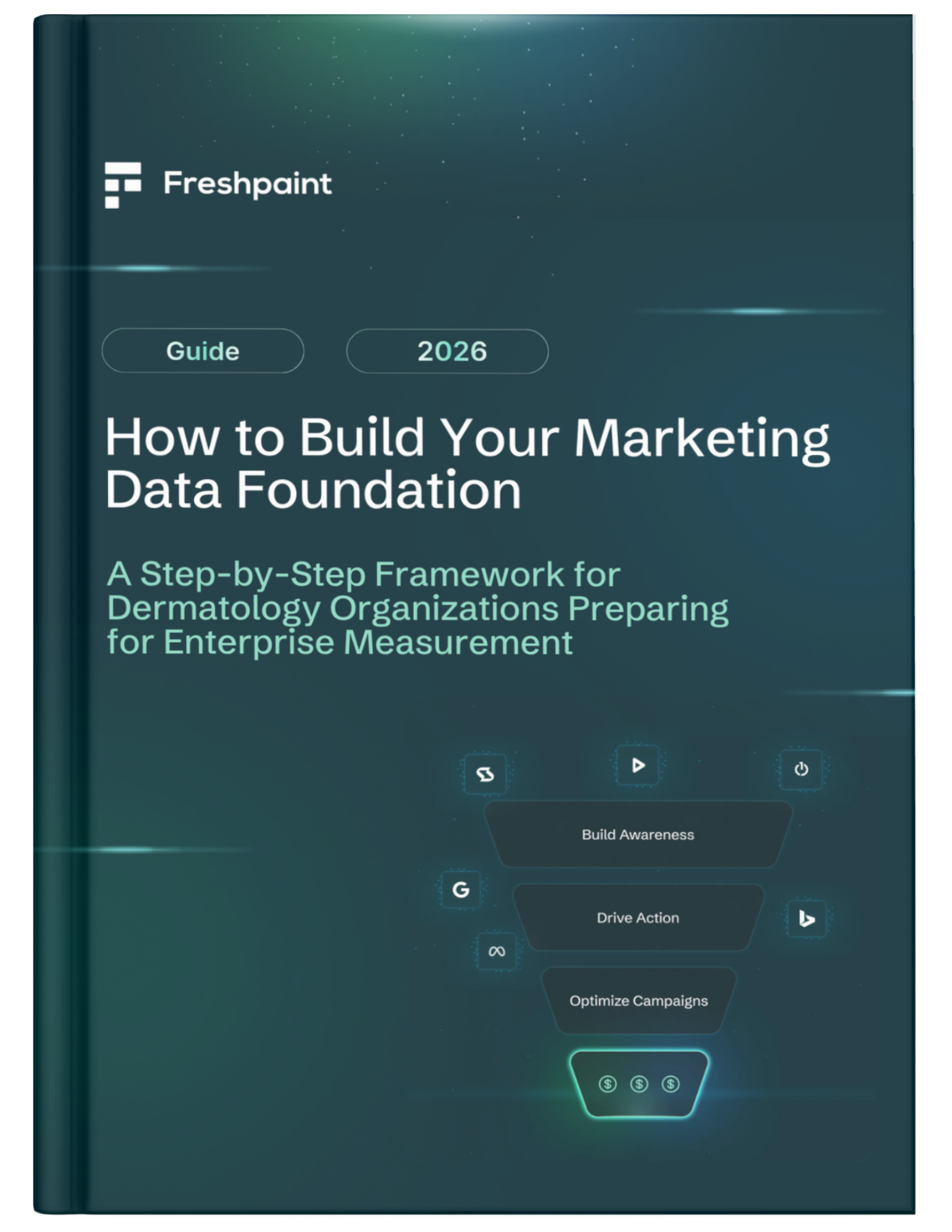
If you want to go deeper, we put together a guide for evaluating healthcare marketing and privacy platforms and building internal consensus. Grab it here.
If you are evaluating a platform partner, here are the five things I would focus on.
1. Data fidelity matters more than most buyers realize
The first thing to understand is that once you move away from native ad platform tracking, some data loss is inevitable. Meta and Google have spent years optimizing their own tracking systems. No third-party vendor is going to replicate that perfectly. If a vendor tells you they can, that should raise a flag.
What does vary meaningfully between platforms is how much data loss you are signing up for, and that difference has real economic impact. If a healthcare organization is spending $350,000 per month on paid acquisition and loses 10% of its conversion signal, it is effectively training bidding systems on incomplete information. That drives worse optimization, rising CPAs, and greater waste over time. If that same organization is only losing 1 to 2% of its signal, the compounding works in the other direction. Cleaner data leads to better decisions.
We have seen that play out in practice. With disciplined implementation and cleaner signal flow back into Google Ads, some customers have taken cost per lead from several hundred dollars down to $12.
The best platforms are straightforward about their data loss rates. They can show you live implementation averages, not modeled projections. They have also done the infrastructure work that actually reduces loss: consistent SDK/pixel load times, reliable event capture before a user leaves the page, and preservation of event properties all the way to the ad destination.
A simple question to ask of vendors you’re evaluating: can you show me actual impression pixel performance data across live customers? Average load time matters, but consistency matters just as much. Erratic performance creates blind spots that are expensive and hard to diagnose.
2. Consent is not a one-time setup decision
Consent is one of the biggest strategic choices a healthcare marketing team makes, and most platforms do not do much to support customers once the initial implementation is completed.
The tradeoff is real.
- An opt-in model gives you the strongest protection against wiretapping and privacy claims, but you are going to collect less data for optimization.
- An opt-out model preserves more visibility, but it comes with more legal exposure, especially while wiretapping litigation remains an active area.
- A state-specific model can be the right operational middle ground, but it adds complexity quickly if you have a broad footprint.
There is no universally correct answer here. The right model depends on your state footprint, your risk tolerance, your legal team's posture, and your growth goals.
It is also not a set-it-and-forget-it decision. Pixel tracking violations have cost U.S. healthcare organizations over $100 million in settlements and fines, and in most of those cases the problem was consent infrastructure that was not being enforced correctly at the data layer. On the flip side, teams also lose data because consent decisions get made without enough visibility into downstream measurement impact.
.jpg)
As the consent landscape in healthcare evolves, a strong platform partner should help you think through those tradeoffs in a concrete way. They should be able to explain how different consent approaches affect data collection, operational complexity, and risk. They should also have a process for helping customers stay current as the legal environment changes.
One question I like here: walk me through a real example where a customer changed consent models. What changed operationally, and what happened to their data?
3. You need end-to-end event visibility
Even strong implementations drift over time. Ad platforms change requirements. Site updates break tracking calls. Consent changes suppress events you did not expect to lose. What matters is not whether problems happen (because they will). What matters is how quickly you can identify and fix them.
A good example is Google Ads requiring a specific value property in a conversion event to maximize match rates. If that property goes missing, your attribution quality starts degrading. On the surface, things may still look fine. Under the hood, the bidding system is learning from incomplete information. A platform with real end-to-end event verification catches that at the payload level before you burn weeks of spend. A platform without it forces someone to notice CAC drift and then reverse-engineer the problem.
The best platforms let you inspect the entire path of the event: what the SDK captured, what happened in server-side processing, what was hashed or suppressed, and what actually arrived at the destination. That level of visibility is what turns a multi-week debugging exercise into a same-day fix.
When you are evaluating vendors, ask them to show you this live. Not a conceptual answer. Not an aggregate dashboard. Ask them to show you an actual event and what happens when a required field is missing. If they cannot do that, you have learned something important.
4. Healthcare complexity should be built into the platform
Healthcare marketing is not just marketing with a few extra constraints. The data environment is materially more complex. You are dealing with cross-domain patient journeys, consent-sensitive call tracking, mobile events, server-side integrations, destination-specific payload requirements, PHI handling, SOC 2 expectations, and the need to enforce consent consistently across every tracking path.
A platform that was truly built for healthcare will reflect that in its architecture. Consent should travel with every event. PHI handling should be consistent across channels. Monitoring should cover the whole surface area, including autotrack, precision SDKs, mobile, server-side, call tracking integrations, and the many ad destinations where data lands. There should be event recovery and alerting when things break.
This kind of depth does not show up well in a feature checklist. It shows up when you ask about real situations. How did the platform handle a mid-campaign consent change that suppressed a key conversion event? What happened when a destination changed payload requirements? Vendors with real healthcare depth usually answer with examples. Vendors that are still building that muscle tend to answer with process. That means you are owning some risk while they mature on your budget and timeline.
5. The team matters as much as the product
This category is easy to underestimate, but it matters a lot. Healthcare marketing problems do not get solved by software alone. Regulations change. Edge cases show up during implementation. Ad platform requirements shift without warning. If your partner cannot help you navigate those realities, the product alone will not save you.
That is why the team behind the platform matters. In Freshpaint's case, that includes more than 65 people across engineering, product, and customer support, along with hands-on support for tag migration, end-to-end event validation, ongoing monitoring, anomaly detection, and expertise across healthcare privacy, data engineering, and ad platform configuration.
Customers tend to describe the difference pretty clearly. One customer said, "I'm not a fan of vendors; I'm a fan of partners. What partners do well is advocate for you, and every person I've interacted with at Freshpaint has made this feel like a real partnership." Another said, "At this point, no matter what the ask is, our legal team's first question is, does it go through Freshpaint?"
That kind of trust does not come from a dashboard. It comes from consistent follow-through, real expertise, and a team that is deep enough to help when things get messy.
So when you evaluate a vendor, ask how the customer success model actually works. Who owns implementation? How do issues get escalated? How do customers stay current on regulatory change? What happens when something breaks mid-campaign? The answers usually tell you pretty quickly whether you are buying software or entering a real partnership.
Five Questions to Ask Any Vendor
If you want a fast way to separate strong platforms from weak ones, start with these five questions:
- What is your average data loss rate across live customer implementations, and how do you measure it?
- Can you walk me through your event migration process and show how you preserve existing event properties?
- What does end-to-end event verification actually look like, and how quickly can we identify an issue with a specific destination?
- How do you enforce consent across autotrack, server-side, and call tracking workflows?
- How do you help customers adapt as consent models change and the regulatory landscape evolves?
Choosing the right platform partner has compounding effects.
Better data leads to better optimization. Better visibility leads to faster fixes. Better support leads to more confidence across marketing, legal, and leadership. That is why this decision matters so much.
If you are working through this evaluation now, we put together a more detailed buyer's guide with the full framework, benchmarks, and criteria we think matter most. Grab it here.

.png)