Single-Funnel Thinking in Healthcare Marketing is Outdated
.jpg)



Ask any marketer whether patients move in a straight line from awareness to appointment and they'll say no — they've watched someone read a few articles, disappear for six months, and come back for something unrelated. While the clean, linear funnel disappeared years ago, too often, the marketing software that healthcare organizations use still runs on it.
So the reports lie by omission. A woman searches, "knee pain," reads an orthopedic group's articles, and moves on. Six months later she tears her ACL, remembers the group, and books an appointment. The dashboard records a direct visit, a phone call, and a booked appointment — and tells the marketing team the relationship started the day she called. It started six months earlier, on a search result nobody got credit for.
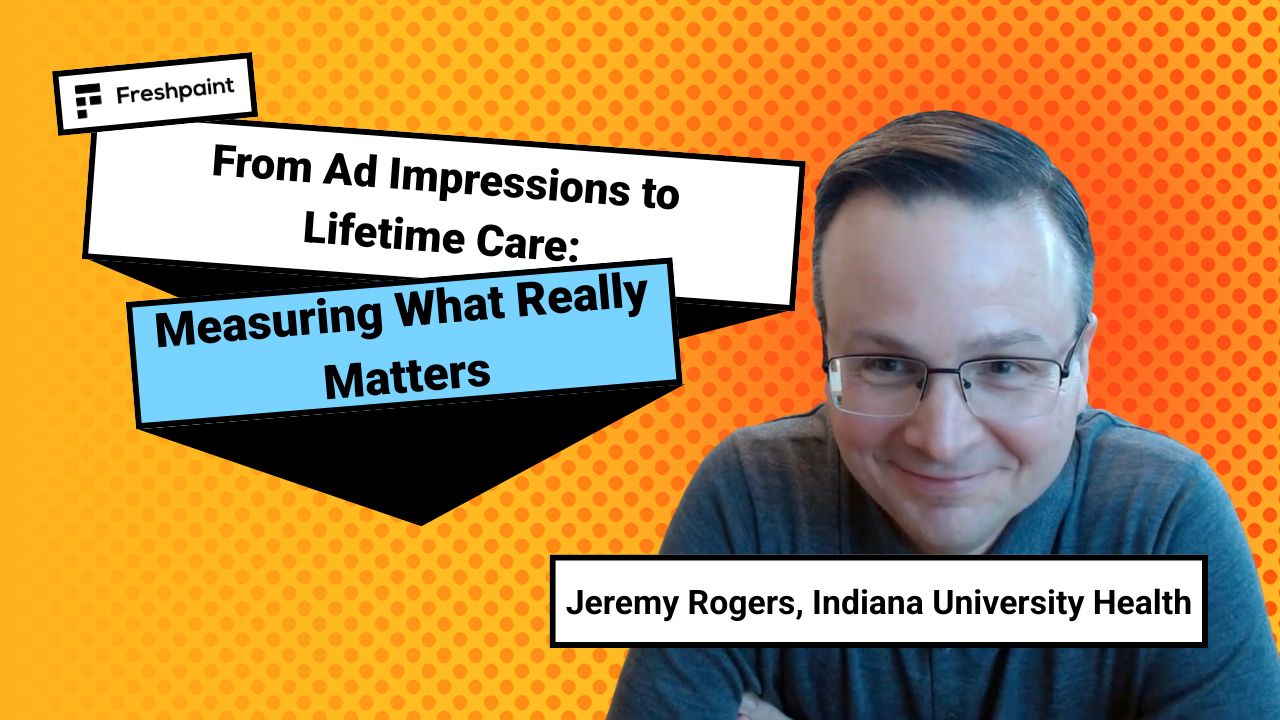
Jeremy Rogers, VP of Digital Marketing and Experience at Indiana University (IU) Health, describes what actually happened as a series of funnels rather than one continuous path. Each new care need is another chance to earn the relationship — "You're winning that relationship every time," he says, "not once."
The fix isn't a reporting patch. It's a different way to build your strategy — and it starts with the care your patients need.
Goodbye Single-Funnel Thinking. Hello Patient Care Funnels.
Patients enter the market whenever a care need arises — an injury, a pregnancy, a new diagnosis, a screening reminder, a nudge from a physician or family member. Each moment starts a new decision journey, with its own timeline and its own mix of touchpoints. Some of those journeys belong to people who've never heard of you. Just as many belong to patients who already have — the ones a new-patient reflex trains marketers to overlook.
.jpg)
Seeing all of those journeys means trading last-click attribution and top-of-funnel volume for a single question: "How do we show up when patients need us most?" Three moves answer it.
How To Move Beyond Single-Funnel Thinking
- Recognize distinct moments in which patients need care. Instead of thinking about one patient funnel, identify the moments when patients realize they need your organization’s services. For most healthcare organizations, those moments can be separated into funnels:
- The young family funnel. Life events like pregnancy create entirely new healthcare needs and decision journeys. Jeremy Rogers says the opportunity isn't simply reaching more people — it's recognizing when existing patients enter a new funnel. Using first-party data, behavioral insights, and propensity modeling, healthcare marketers can anticipate those moments and engage patients with relevant services before they begin searching elsewhere.
- The chronic condition funnel. Not every healthcare decision happens quickly. A patient managing a chronic condition or a newly diagnosed illness may spend weeks or months researching treatment options, reading educational content, discussing care with family, or seeking a second opinion before choosing a provider.
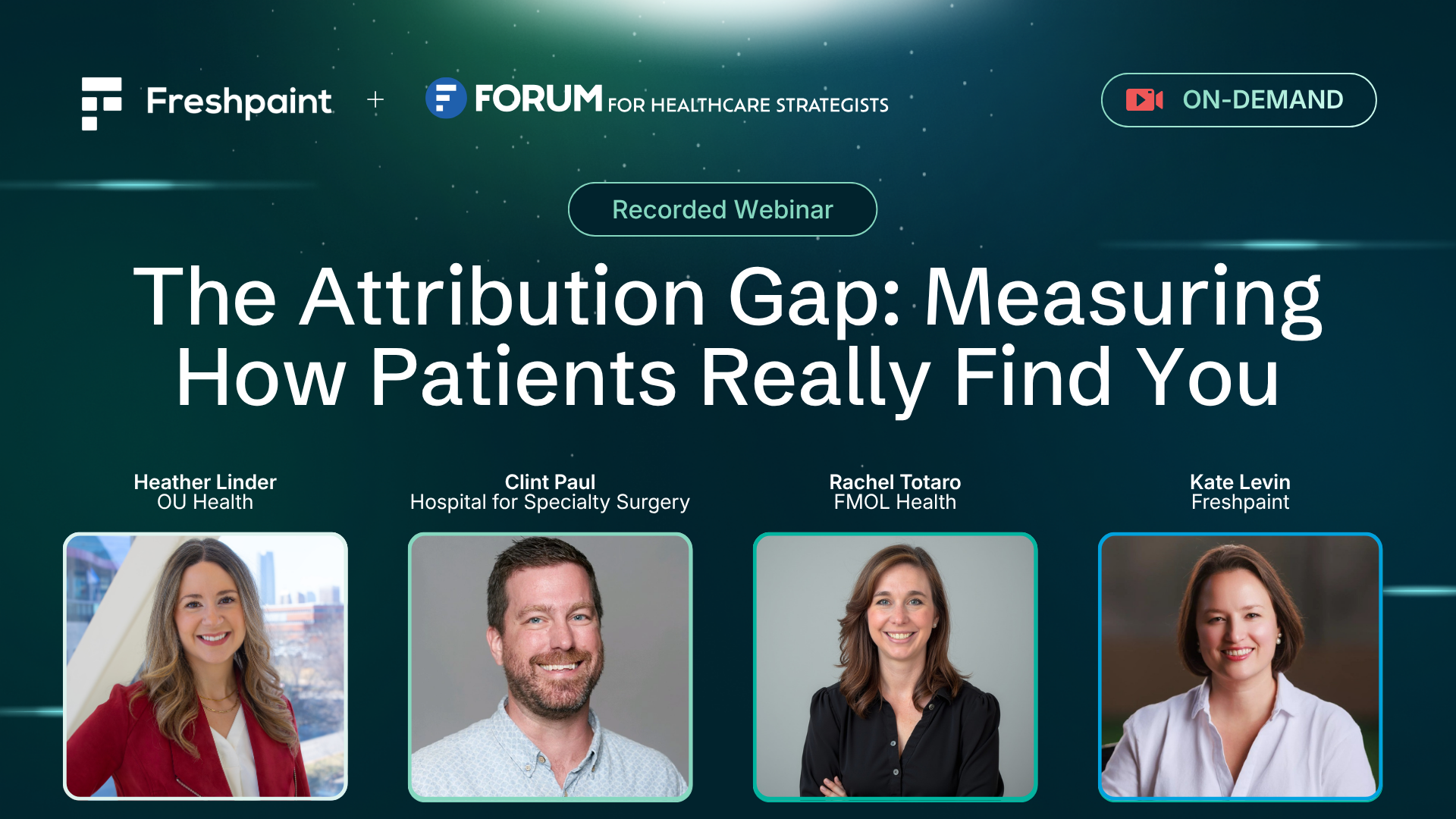
- The reactivation funnel. A patient who hasn't engaged with your organization in years may be due for a completely different healthcare service. By connecting CRM and EMR data, OU Health identified high-risk patients, delivered personalized screening reminders through trusted clinical channels like MyChart, and encouraged preventive care before patients presented with late-stage disease.
- The acute care funnel. Unlike the others, this one is a linear funnel. Someone searching for “urgent care near me” after an injury often has immediate intent and needs care quickly. Google search and other intent based channels perform great in these situations.
- Match your marketing strategy to each funnel. Each funnel should be treated as parts of a patient journey that marketers need to understand and measure. Each requires a unique mix of content, channels, and engagement strategies. For example, acute care gets search; intent channels, chronic condition, or complex care gets content, email, and CRM; and patient reactivation gets first-party data and triggered outreach.
- Measure the entire journey — not just the last-click. Traditional attribution reports can easily identify the last-click before conversion, but they rarely capture the sequence of interactions that built trust or brand recognition over weeks, months, or years.
The Benefits of Adopting a Multi-Funnel Mindset
Moving from single-funnel thinking to a multi-funnel strategy changes more than attribution reporting. Instead of learning which channels deserve the credit, teams begin to see how their channels work together to create demand, build trust, and drive patient conversions. That’s the shift from measuring campaigns to understanding patient relationships — and it lets marketers:
- Understand patient behavior. Expand the aperture beyond last-click attribution to see how awareness, education, consideration and conversion work together.
- Invest budgets more strategically. Understand each channel’s role in creating demand, building trust, and driving conversions to make more informed budget decisions across the marketing mix.
- Strengthen patient engagement. Recognize when existing patients enter a new moment of need, enabling more effective reactivation campaigns, preventive care outreach, and long-term relationship building.
- Activate first-party data more effectively. Combine first-party data with behavioral insights to deliver timely, personalized outreach through trusted channels when patients are most likely to engage.
- Prove marketing’s contribution to growth. Demonstrate how coordinated, multi-channel marketing influences patient acquisition, engagement, and long-term growth — not just individual campaign performance.
None of that shows up in a last-click report. Instead, it shows up in your patient relationships. Which is the real problem worth solving.
Stop Optimizing One Funnel. Start Understanding the Patient Relationship.
The woman who tore her ACL didn’t move through a single funnel. She experienced multiple moments of awareness, consideration, trust, and intent before scheduling her appointment.
That’s how healthcare works. Patients enter and exit the market throughout their lives, creating moments for organizations to educate, engage, and earn trust. The organizations gaining a competitive advantage aren't simply investing in more marketing channels. They're recognizing those moments, tailoring engagement to each patient’s needs, and understanding how each touchpoint contributes to the relationship.
For years, healthcare marketers have wondered which channel generated the patient conversion; now they’re asking, “How did this patient arrive here?” The answer rarely lies in a single click. It lives across the entire patient journey. Seeing those journeys clearly is the hard part — and it’s where Freshpaint Journeys comes in. Rather than judging Google Ads, Meta, or connected TV (CTV) in isolation, Journeys reveals where patients first discover your organization, how they move across touchpoints, and which channels actually influence conversion. It turns the series of funnels from an idea into something you can measure.
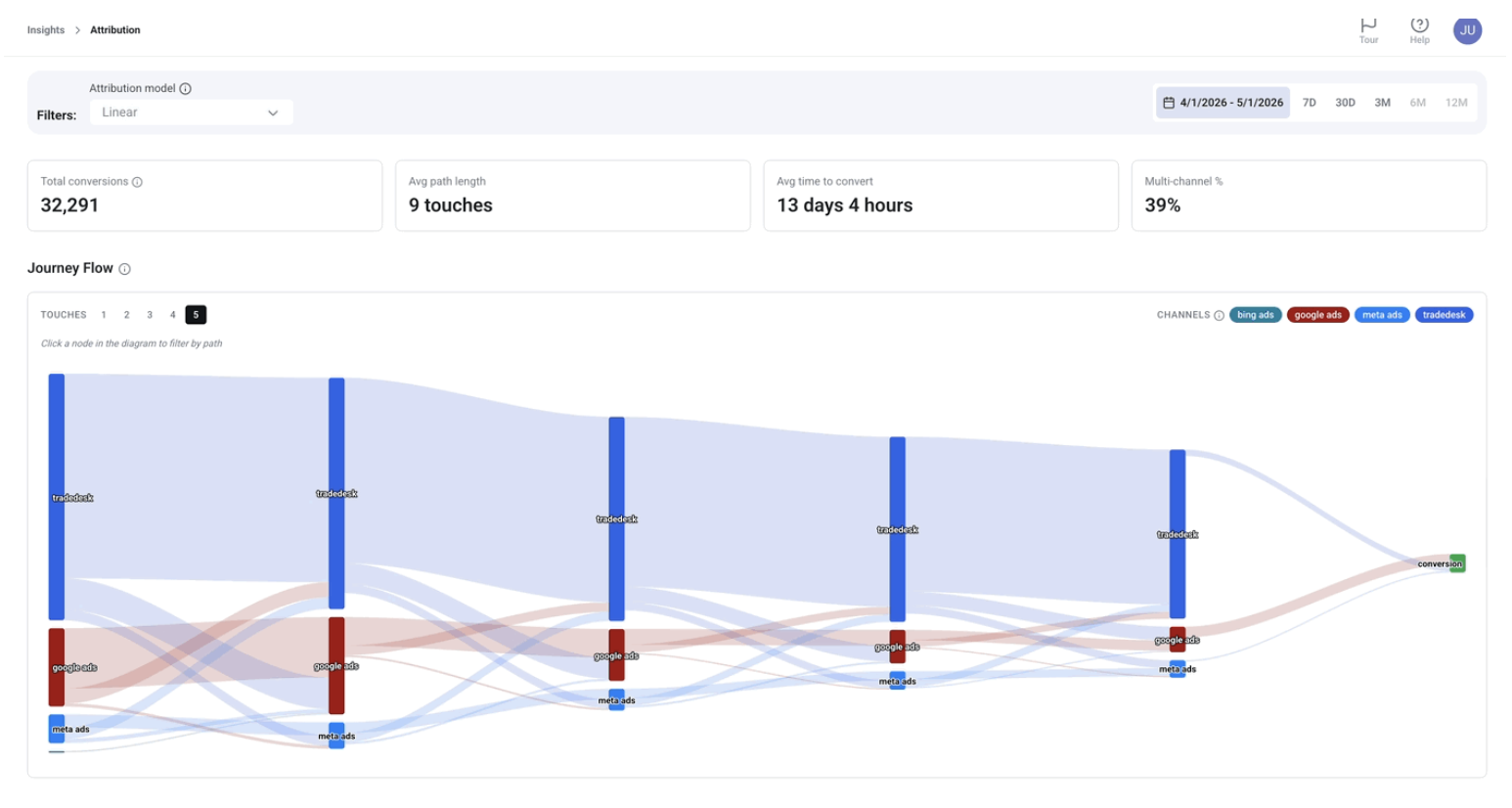
Ready to see your patients’ journeys more clearly?
Every patient follows a different path to care. Freshpaint Journeys helps healthcare marketers visualize those paths—from the first interaction through conversion—so they can understand how channels work together, optimize investments with confidence, and demonstrate marketing's impact across the entire patient journey.
Schedule a demo to see how Freshpaint Journeys can help your team move beyond last-click attribution and uncover the moments that matter most.




.png)