The Visibility Gap in Healthcare Marketing Measurement — And How to Fix It
.jpg)



Healthcare marketers have more data than ever before. The challenge is connecting that data to what executives want to know: Which marketing investments and campaigns are driving booked appointments and growth?
That's the question behind Freshpaint's 2026 State of Healthcare Marketing report. We surveyed 200 healthcare marketing leaders to understand how they're measuring performance, where visibility breaks down, and what separates the organizations making confident marketing decisions from those still relying on educated guesses.
The infographic below captures some of the report's biggest takeaways.
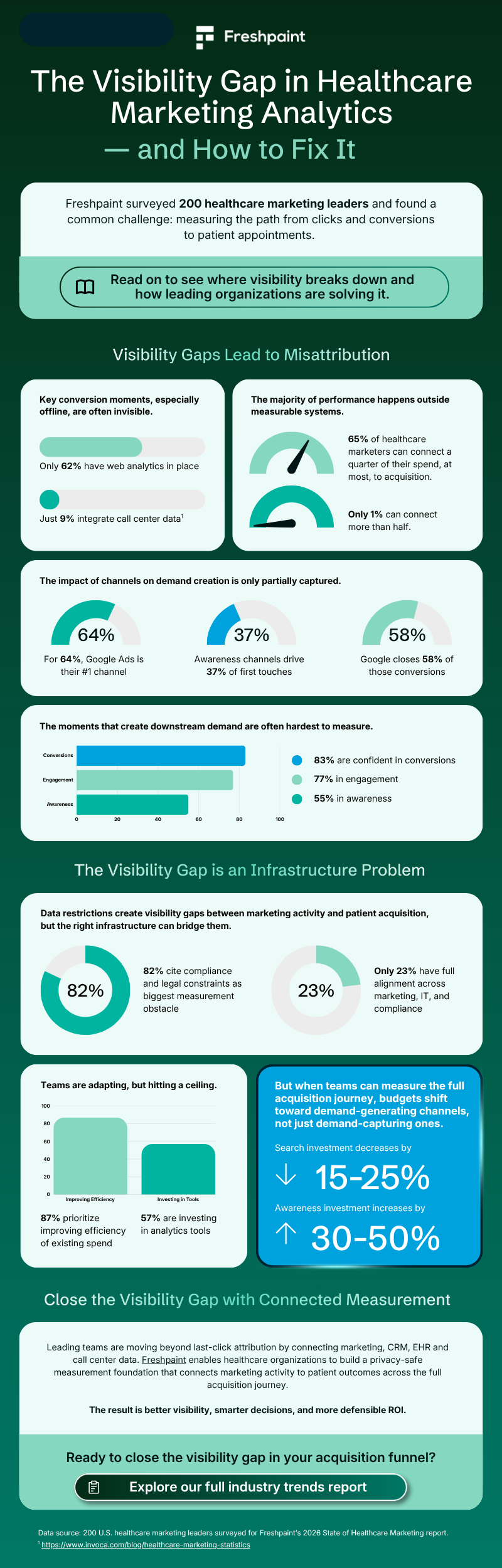
One finding stands above the rest: most healthcare marketers can't see the full patient journey.
Nearly half say they can consistently improve ROI at the appointment level, but only 1% can connect more than half of their marketing spend to patient outcomes. If you can't see where patients came from, or what influenced them along the way, it's hard to know where to invest next.
That visibility gap also skews attribution.
Google Ads is the largest marketing channel for 64% of healthcare organizations. But the report found that awareness channels are often creating demand long before search gets credit for closing it: Among organizations using DSP and CTV campaigns, those channels generate 37% of first touches, yet Google receives credit for closing 58% of those conversions.
That's a recipe for overinvesting in search and underinvesting in the channels that started the journey.
Closing that gap is about connecting the systems that already exist.
Today, only 9% of organizations integrate call center data into their measurement, and just 21% use hybrid attribution models that combine media mix modeling with digital attribution.
At the same time, 57% of marketers say they're investing in analytics and attribution tools — a sign that healthcare organizations increasingly recognize that better measurement leads to better decisions.
The organizations making the biggest gains also recognize that measurement is a team sport.
While 82% of marketers cite compliance and legal constraints as their biggest measurement obstacle, only 23% say marketing, IT, and compliance are fully embedded partners. The leaders are changing that by making privacy part of the foundation instead of treating it like a roadblock, which leads to better attribution, stronger executive reporting, and more confidence in marketing investments.
Perhaps the most encouraging finding is that marketers aren't responding to pressure by pulling back.
When marketing budgets tighten, 87% prioritize improving the efficiency of existing spend, and more than half are investing in the measurement capabilities needed to prove what's working. The conversation is shifting from How do we spend less? to How do we see more clearly?
The full 2026 State of Healthcare Marketing report delves into the benchmarks, frameworks, and practical next steps behind the data.
- Download your copy to go deeper.
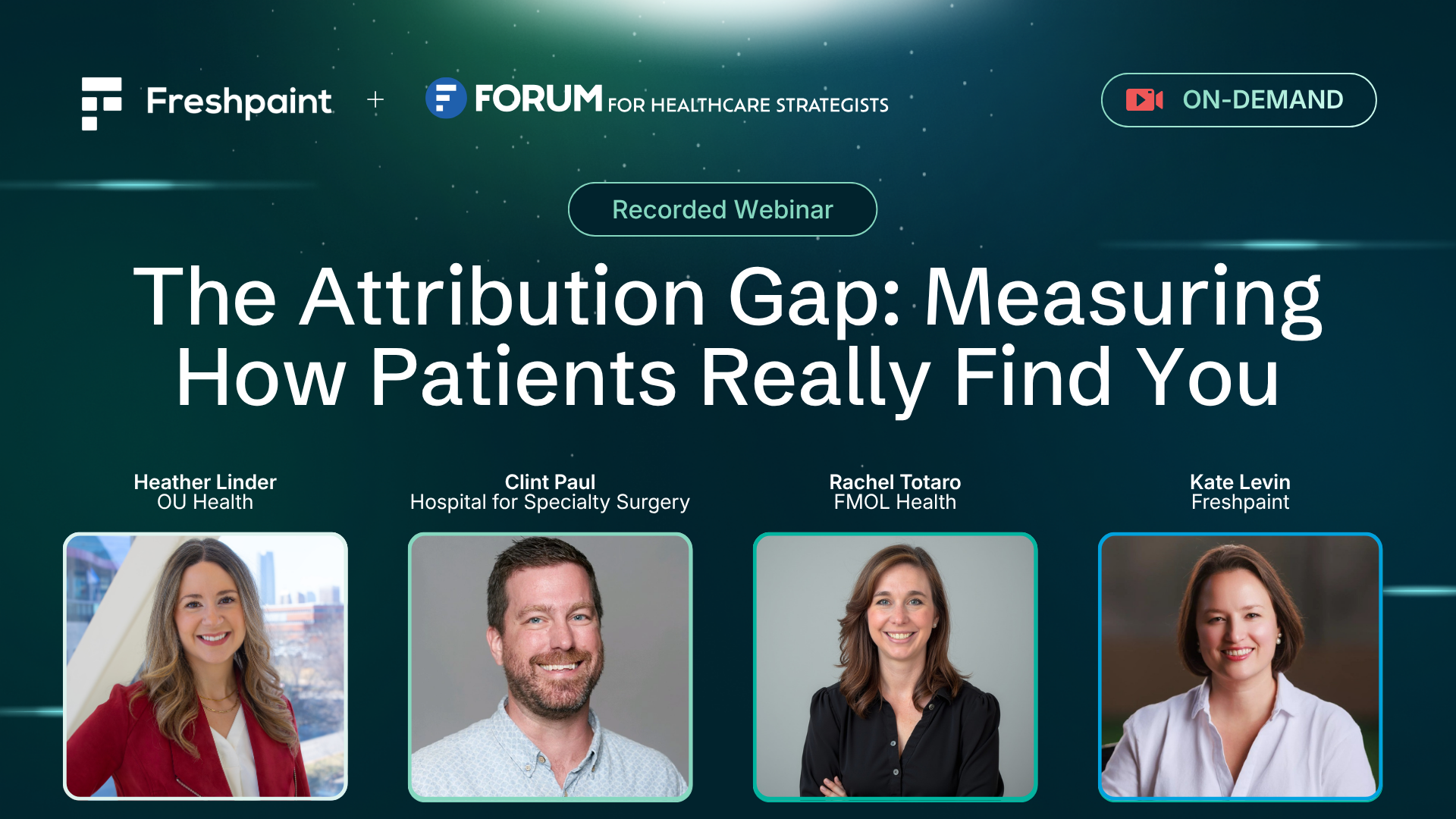
- Want to see what this looks like in practice? Join healthcare marketing leaders from OU Health, Hospital for Special Surgery, and FMOL Health on July 21 as they discuss how they've evolved beyond last-click attribution to reflect how patients actually find care.